
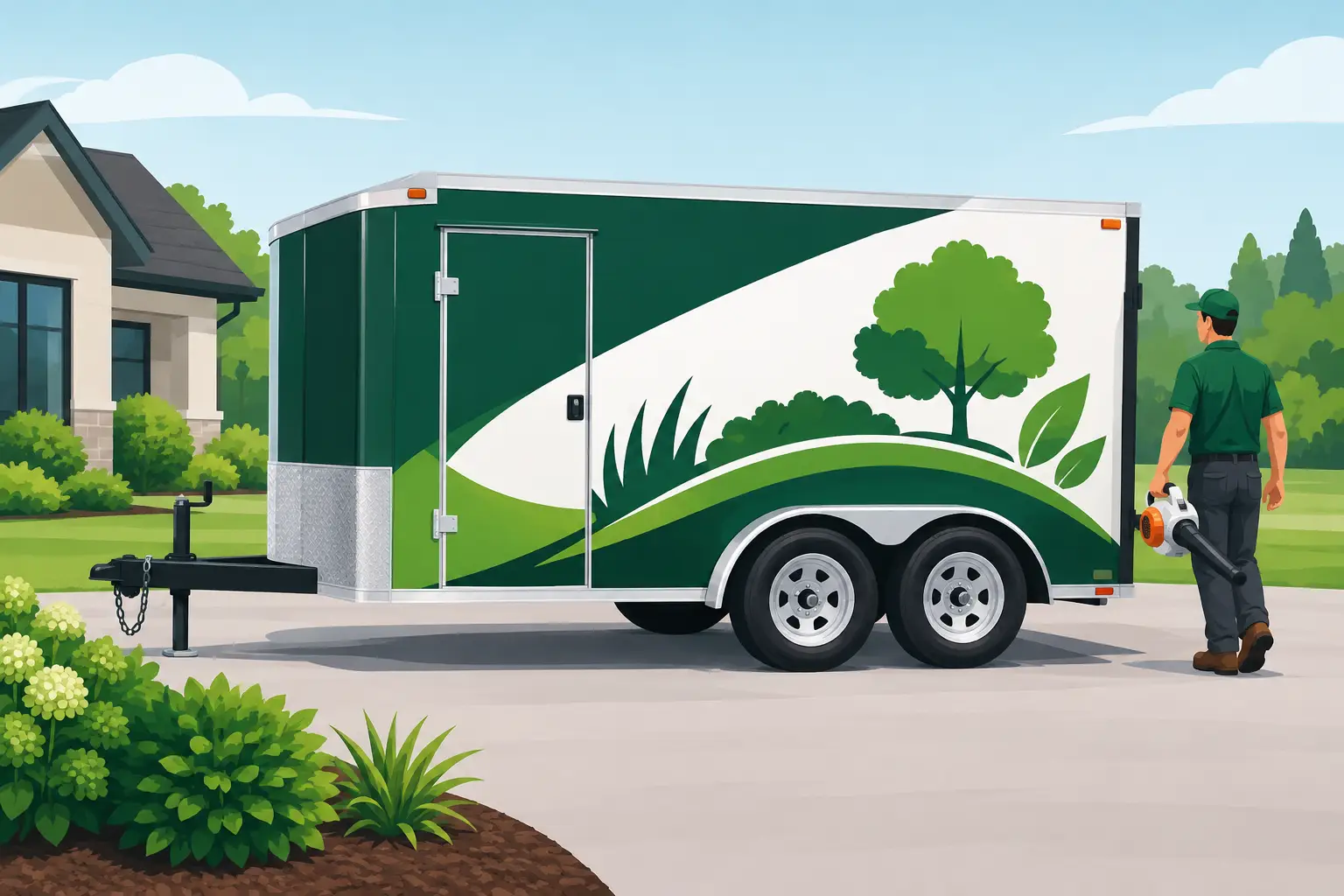
A clean trailer parked at the curb is often the first thing a potential customer sees before they ever meet your crew. Landscaping trailer branding turns that parked equipment into a hardworking local ad – one that shows your company name, what you do, and how to reach you while the crew is busy making the property look better.
For landscapers, lawn care operators, and growing crews, the goal is not to cover every square inch with graphics. The goal is instant recognition. A homeowner driving past should be able to read your name and phone number in a few seconds. If the design is clear, professional, and built for outdoor abuse, your trailer keeps promoting the business between jobs, on the road, and at supply stops.
Start With the Information Customers Need
Your trailer has limited attention space, even if it has plenty of physical space. Most people will see it from a distance or while moving through traffic. Lead with the information that helps them identify and contact your business quickly: your company name, a phone number, and a simple service description when needed.
A company name that does not clearly say what you do may benefit from a short line such as “Lawn Care & Landscaping,” “Landscape Design,” or “Commercial Property Maintenance.” Keep it direct. A long list of every service you offer can make the trailer hard to scan. If hardscaping, tree work, irrigation, or snow removal is a major revenue driver, choose the service most likely to matter in the area where the trailer spends its time.
Your phone number should be large enough to read from across the street. A website, email address, or social handle can be useful, but only after the core information is handled. When every line competes for attention, none of it works as well.
Choose Trailer Lettering That Reads at a Glance
The best landscaping trailer branding uses contrast, simple type, and purposeful sizing. Dark lettering on a light trailer, or light lettering on a dark trailer, gives your message the separation it needs. Green may fit the industry, but green lettering on a weathered green trailer can disappear quickly. A white, black, yellow, or bright accent color may be the better business choice.
Font selection matters just as much. Script fonts and highly decorative lettering can look sharp on a business card, but they often become difficult to read on a moving trailer. Use a bold, clean font for the company name and contact details. Save specialty fonts for a small logo element or tagline, not the information customers need to read first.
Size should follow viewing distance. Your business name is normally the largest element. The phone number should be close behind it. Secondary services and web details can be smaller, but they should still be readable without someone standing beside the trailer.
Use the Side Panels as Your Main Billboard
The trailer sides usually offer the best viewing angle and the largest uninterrupted display area. Place your primary message here. On an enclosed trailer, this may be a full door panel. On an open utility trailer, solid side rails, equipment boxes, and front panels can still support bold vinyl lettering or printed graphics.
The rear of the trailer is valuable too, especially in traffic. Keep it simple because drivers behind you have less time to read. A company name, phone number, and short service line are usually enough. Do not cover required lights, reflectors, license plates, safety warnings, or registration information. Good branding works with the trailer’s required hardware, not over it.
Make the Design Match the Work You Want
A basic mowing route and a premium landscape design company do not need the same visual approach. A neighborhood lawn care operation may get better results from a bold name, a phone number, and “Weekly Lawn Service.” A company pursuing larger commercial properties may want a more refined logo treatment, a broader service line, and a cleaner color palette that feels established.
This is where branding becomes more than decoration. Your trailer tells customers what kind of business they should expect. If you sell detail-oriented landscape upgrades, your graphics should look organized and precise. If fast, dependable lawn maintenance is your strength, make that message easy to spot.
Vinyl Graphics Need to Handle Real Workdays
Landscaping trailers take a beating. They see sun, rain, road grit, mower exhaust, pressure washing, branches, fertilizer dust, and repeated loading. Cheap materials or poor application can lead to peeling edges, faded colors, and a neglected look that does not reflect the quality of your work.
Use outdoor-rated vinyl designed for vehicle and equipment graphics. For straightforward company names, phone numbers, and service lettering, cut vinyl is a durable, clean option. For a multicolor logo, photo-based imagery, gradients, or more complex artwork, printed vinyl may make more sense. The right choice depends on the design, the trailer surface, and how long you expect the graphics to stay in service.
Surface preparation is not a small detail. Wash the application area thoroughly, remove wax and grease, and let it dry completely. Apply lettering to a sound, smooth surface whenever possible. Rust, peeling paint, heavily textured panels, and old adhesive residue can shorten the life of even quality vinyl.
If your trailer gets repainted or replaced regularly, plan for that before investing in a large graphic package. Removable magnetic signs can help on steel surfaces for temporary identification, but they are not the best answer for every trailer or every daily route. Permanent vinyl lettering generally delivers a cleaner, more integrated appearance for equipment that stays in your fleet.
Build a Layout Before You Order
The easiest way to avoid a crowded trailer is to decide the reading order before choosing colors and effects. Ask what a person should see first, second, and third from 20 to 30 feet away. For most companies, that order is the business name, the service category, then the phone number.
A useful layout includes these elements:
- A company name or logo with enough size to lead the panel
- A short description of your primary landscaping service
- A large phone number for fast local contact
- One optional secondary detail, such as a website or license information
Leave open space around the lettering. Empty space is not wasted space. It gives the graphics room to stand out and keeps the trailer from looking like a bulletin board.
Before finalizing an order, measure the usable panel area rather than estimating from the overall trailer length. Account for door seams, hinges, latch hardware, fenders, rails, vents, and equipment racks. A design that looks balanced on a screen may need adjustment when a side door breaks up the available surface.
Keep Your Fleet Consistent as You Grow
A branded trailer looks stronger when it matches your truck, crew shirts, yard signs, and invoices. You do not need an elaborate brand standards manual to get this right. Start by using the same logo, core colors, font style, and phone number format across every customer-facing item.
Consistency is especially important if you run more than one crew. A homeowner who sees one trailer at a neighbor’s property should recognize the same company when another truck arrives at a commercial site. That repetition builds familiarity, and familiarity makes a local business feel more established.
Save your approved artwork, vinyl colors, and measurements for each trailer model. When you add equipment or replace a trailer, you can recreate the look without starting from scratch. eDecals.com makes it easy to create custom lettering online when you need matching company names, phone numbers, service lines, or replacement graphics for the fleet.
Do Not Let Branding Create a Compliance Problem
Commercial operators may need more than a logo and phone number. Depending on your vehicle, trailer, state, and operating area, you may need USDOT numbers, company identification, weight markings, license details, or other required lettering. These requirements can be specific about placement, size, and contrast.
Keep compliance markings legible and separate from decorative elements. A crowded graphic layout can make required information harder to find. If you operate across state lines or run heavier equipment, verify the rules that apply to your business before production. Clean, correctly sized vinyl lettering can help the trailer look professional while keeping mandatory information visible.
Make Every Stop Count
Your trailer already travels through the neighborhoods and commercial areas where your next customers live and work. Give it a design that can be read quickly, survives the workday, and reflects the level of service your crew delivers. Start with clear lettering, strong contrast, and a phone number people can remember – then let every jobsite become proof that your business is active, capable, and ready for the next property.