
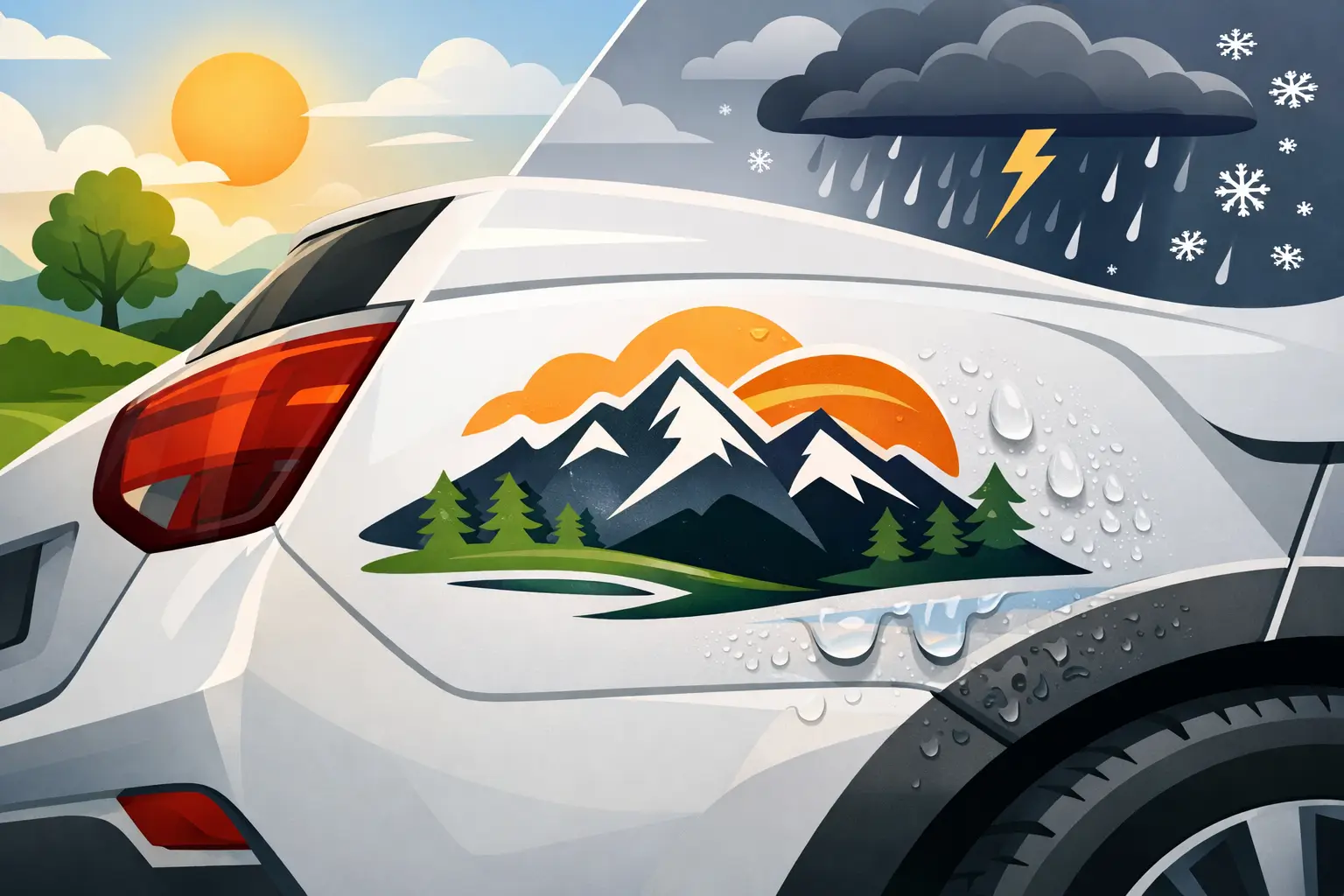
A truck door graphic that looks sharp in the shop still has to survive highway spray, summer heat, freezing nights, car washes, and UV exposure. So, are vinyl decals weatherproof outdoors? Quality outdoor-rated vinyl decals are built for it, but their real-life durability depends on the vinyl type, ink or film color, surface preparation, installation, and the conditions they face every day.
For a work truck, race trailer, boat, ATV, or personal vehicle, the right decal can stay clean and readable for years. The wrong material, or a rushed install on a dirty surface, can lead to lifting edges, fading, cracking, or adhesive failure much sooner than expected.
Are Vinyl Decals Weatherproof Outdoors?
Yes, outdoor vinyl decals are weatherproof when they are made from exterior-grade materials and applied correctly. They are designed to handle rain, normal moisture, sunlight, wind, and temperature swings. That makes them a practical choice for vehicle lettering, boat registration numbers, windshield banners, equipment labels, race numbers, and business graphics.
Weatherproof does not mean indestructible. Vinyl has limits. A decal that spends every day under intense desert sun will age differently than one on a garage-kept car in a mild climate. A boat decal exposed to saltwater and frequent scrubbing needs more care than lettering on an enclosed trailer. Chemical spills, pressure washers, automatic brushes, road salt, fuel, and abrasion can all reduce service life.
The goal is to match the decal material to the job instead of treating every vinyl graphic like it has the same performance level.
Start With the Right Vinyl Grade
The biggest durability decision happens before the decal is cut or printed. Outdoor vinyl is generally available in calendered and cast grades, and each has a place.
Calendered vinyl for flat, everyday applications
Calendered vinyl is a dependable option for flat or gently curved surfaces. It works well for many truck door decals, trailer lettering, equipment markings, window graphics, and temporary-to-medium-term promotional decals. It is thicker than cast vinyl and usually more budget-friendly.
For a flat panel on a contractor truck or a clean, smooth toolbox, calendered vinyl may be exactly what the job needs. It is not usually the first choice for deep body channels, compound curves, or high-demand wrap work. Over time, lower-grade calendered films can shrink more than premium materials, especially in heavy sun.
Cast vinyl for demanding vehicle and marine use
Cast vinyl is the premium choice for long-term graphics on vehicles, boats, motorcycles, and other surfaces with curves, rivets, contours, or recesses. It is thinner, more conformable, and more stable over its life. That means it is better suited to demanding outdoor conditions and complex surfaces.
If you are lettering a commercial fleet, applying a graphic to a performance vehicle, or adding boat names and registration numbers that need to stay put season after season, cast vinyl is often worth the upgrade. It costs more, but it gives you stronger long-term performance where cheap material can become an expensive redo.
Printed Decals Need Protection From UV and Abrasion
Solid-color cut vinyl gets its color from the film itself. Printed decals rely on inks, which means the printed surface needs an extra layer of defense for serious outdoor use.
A quality laminate protects printed graphics from UV fading, moisture, scuffs, and routine cleaning. It also gives the decal a finished surface, such as gloss, matte, or luster. For vehicle graphics that will see sun, road debris, and wash cycles, lamination is not just a cosmetic option. It is part of the durability package.
This matters most for full-color logos, photo-based designs, sponsor decals, custom stickers, and detailed fleet branding. A simple one-color racing number may not need the same construction as a printed company logo with gradients and small text. Choose based on where the graphic will go and how hard it will be used.
Surface Preparation Decides Whether a Decal Stays Put
Even the best outdoor vinyl cannot bond well to a surface coated with wax, grease, dirt, silicone dressing, or oxidation. Most decal failures that look like an adhesive problem are really surface-prep problems.
Wash the area first, then let it dry completely. Clean the application zone with isopropyl alcohol using a lint-free cloth. Do not apply over fresh wax, ceramic coating residue, oily polish, tire shine overspray, or household cleaners that leave a film behind.
Paint condition matters too. Vinyl adheres best to smooth, sound factory paint, clean glass, and properly finished metal or plastic. It may not bond reliably to peeling clear coat, heavily textured plastic, chalky gelcoat, rust, cracked paint, or low-energy plastics. If the surface itself is failing, the decal cannot fix it.
New paint needs curing time before graphics are installed. Follow the paint manufacturer’s recommendation, since trapped solvents can interfere with adhesion and may damage the finish when the vinyl is removed later.
Temperature Matters During Installation
Vinyl adhesive needs the right conditions to make a strong bond. Installing decals in extreme cold can make the film stiff and reduce initial adhesion. Applying in high heat can make the vinyl harder to control and may trap stretch or tension in the material.
A clean, dry, moderate-temperature workspace gives you the best result. Once installed, give the adhesive time to set before exposing the decal to heavy rain, a car wash, or a long road trip. The exact wait time depends on the material and conditions, but patience during the first day pays off.
For larger graphics, long lettering runs, boat names, or commercial vehicle door decals, take your time with alignment and use firm, overlapping squeegee strokes. Pushing air out as you go prevents bubbles and helps the adhesive make full contact with the surface.
Outdoor Conditions That Shorten Vinyl Decal Life
Outdoor-rated decals are made to work, but some environments are tougher than others. Four conditions deserve special attention:
- Constant sun and heat: UV exposure slowly breaks down color and adhesive. Dark-colored vehicles and metal panels can also become extremely hot.
- Salt and chemical exposure: Road salt, saltwater, fuel, degreasers, and industrial chemicals should be rinsed off promptly.
- High-pressure washing: A pressure washer can lift an edge if the spray is held too close or aimed directly at the decal edge.
- Mechanical abrasion: Boots, cargo, branches, dock lines, trailer straps, and frequent contact can wear a graphic faster than weather alone.
For marine use, rinse saltwater off decals with fresh water after use. For commercial vehicles, keep corrosive products and harsh solvent cleaners away from lettering whenever possible. For off-road machines, inspect decal edges after muddy rides or power washing.
How to Clean Exterior Vinyl Decals
Routine cleaning is simple. Hand wash with mild soap and water, then rinse thoroughly. A soft microfiber cloth or nonabrasive sponge is usually enough. Avoid harsh scouring pads, aggressive solvent cleaners, and products meant to strip wax or remove tar unless you know they are safe for vinyl.
Automatic car washes can be fine for properly installed quality decals, but brush systems are harder on graphics than touchless washes. If you use a pressure washer, keep the nozzle at a safe distance and spray across the decal rather than forcing water into an edge. Never concentrate the stream on corners, seams, or small cut details.
Wax can be applied around vinyl graphics, but avoid leaving heavy buildup along the edges. For matte or textured finishes, use cleaning products that will not add unwanted shine.
Choose Decal Design With Outdoor Use in Mind
Small details look great on a screen, but they can be harder to maintain outdoors. Very thin strokes, tiny isolated dots, and sharp internal corners have less adhesive area and are more vulnerable to lifting. That does not mean you have to simplify every design. It means a graphic intended for a work truck or boat should be designed for the surface and the environment.
High-contrast colors also stay readable longer at speed and from a distance. That is especially useful for USDOT lettering, business names, race numbers, boat registration, and trailer identification. If the decal has a compliance or safety function, prioritize legal sizing, contrast, and placement before decorative effects.
At eDecals.com, customers can build lettering and graphics around the real job: clean vinyl lettering for a truck door, race numbers for track use, registration numbers for a boat, or a custom banner that needs to perform outdoors. Selecting the right size, color, and material up front is faster than replacing a decal that was never suited to the application.
A weatherproof decal should look like it belongs on the vehicle, not like it is waiting for the first storm to come loose. Start with an exterior-grade material, apply it to a properly prepared surface, and treat it like the hardworking graphic it is. Your truck, boat, trailer, or race machine will keep making the right impression long after the install day.