
A truck door has limited real estate. A boat registration number has to stay readable at speed. A race car needs numbers that look sharp from the stands. That is why the choice between vinyl lettering versus printed decals is more than a style decision. It affects visibility, installation, durability, and how professionally the finished vehicle or sign performs.
Both products are made for real outdoor use, but they do different jobs. Cut vinyl lettering delivers crisp individual characters and clean graphic shapes. Printed decals put full-color artwork, photos, gradients, and detailed designs onto a single piece of vinyl. The right choice depends on what you need the graphic to say and where it has to work.
Vinyl Lettering Versus Printed Decals: The Main Difference
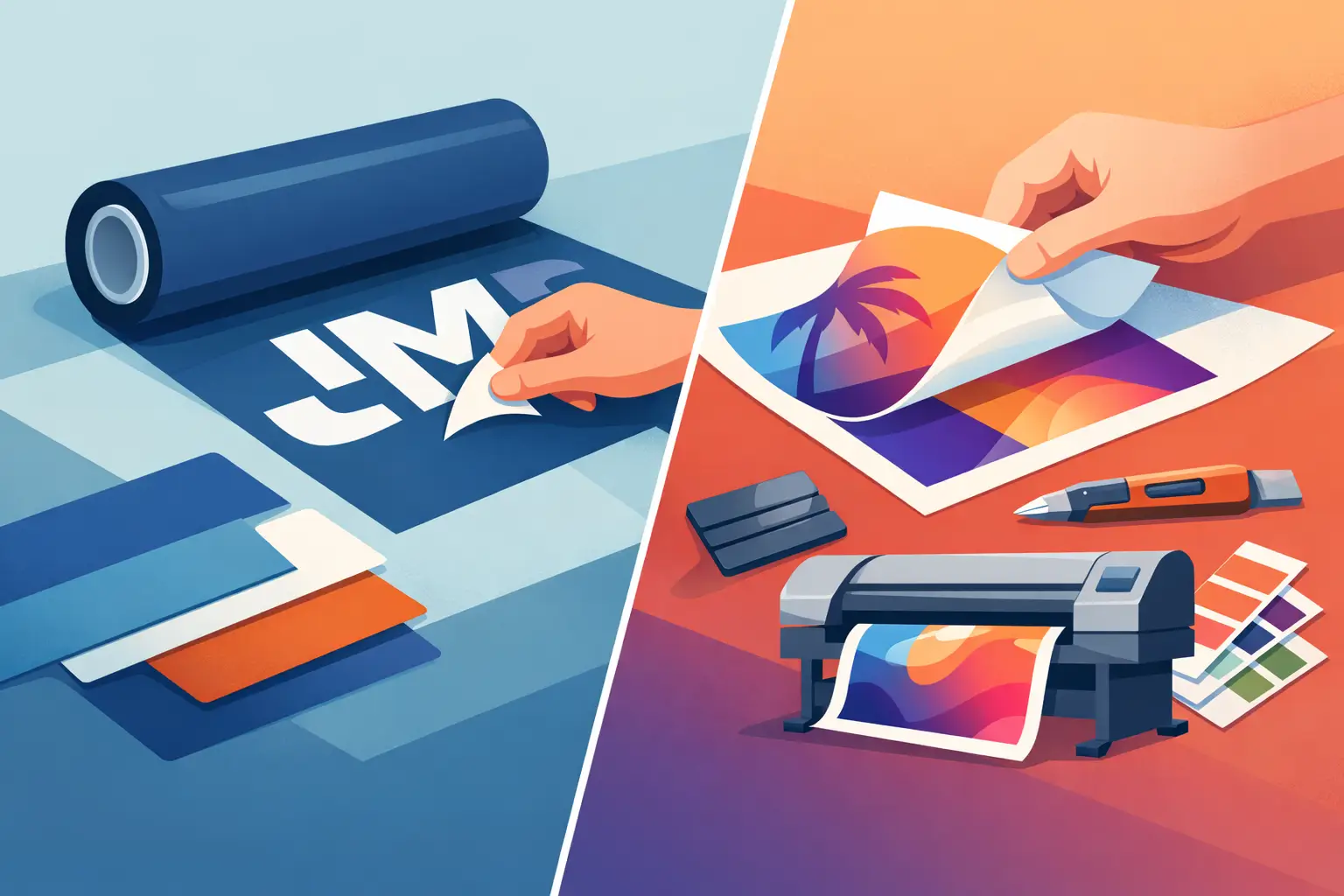
Vinyl lettering is cut from solid-color adhesive vinyl. Each letter, number, stripe, or simple graphic element is individually cut, then held in place with transfer tape for installation. Once applied, the background is the surface underneath it – your paint, glass, gelcoat, trailer panel, or sign blank.
Printed decals start with artwork printed directly onto vinyl material. The finished design may be contour cut around the outside shape, but the colors and details are printed together on one decal. This format gives you far more visual freedom, especially when a design needs multiple colors, small details, shading, or photographic elements.
Think of cut lettering as the clean, purpose-built choice for words, numbers, and bold graphics. Think of printed decals as the better option when the artwork itself needs to do the talking.
When Cut Vinyl Lettering Is the Better Fit
Cut vinyl lettering is the workhorse for vehicle identification, compliance information, names, phone numbers, and clean custom styling. It is a natural choice for contractor truck doors, USDOT numbers, boat names, registration numbers, windshield banners, trailer lettering, and racing numbers.
Because there is no printed background around each character, lettering looks integrated with the surface. On a black truck door, white lettering has a sharp painted-on appearance. On a boat hull, registration numbers stay clean and easy to read. On a race car, a bold number can be sized and positioned for instant recognition.
This option also works especially well when you want exact control over the layout. You can select your font, color, size, effects, and spacing to match the vehicle or brand. A fleet manager may need every truck marked consistently. A Jeep owner may want a trail name in a specific font. A boat owner may need letters that meet required size and contrast guidelines. Cut lettering handles all three without adding unnecessary visual clutter.
Benefits of vinyl lettering
The strongest advantage is clarity. Solid-color vinyl produces sharp edges, high contrast, and a professional finish from a distance. It is also an efficient choice for straightforward graphics because you are not paying to print a full-color image when the job only needs clean text or simple shapes.
Durability is another reason lettering remains a go-to product for commercial and recreational use. Quality outdoor vinyl is built to handle sun, rain, road grime, and regular washing when it is properly applied to a clean, suitable surface. Individual letters also conform well to many smooth vehicle panels, windows, hulls, and trailers.
There are limits. Cut vinyl cannot reproduce a photograph, camouflage pattern, fade, metallic-looking artwork, or complex multicolor logo in one piece. It can use multiple layers of vinyl, but intricate layered designs take more planning and can become less practical as the artwork gets detailed.
When Printed Decals Make More Sense
Printed decals are made for artwork that cannot be created from solid-color cut vinyl alone. If your logo has gradients, tiny illustrated details, several colors, or a mascot, printing is usually the clear answer. The same goes for sponsor graphics, product labels, safety graphics with icons, full-color club decals, and custom artwork for trucks, motorcycles, ATVs, or RVs.
A printed decal lets your brand use its actual colors and design elements rather than a simplified version. That matters when recognition is part of the job. A landscaping company with a detailed logo, a race team with sponsor artwork, or a marine business with full-color branding can keep the visual identity intact.
Printed decals can also add personality where lettering alone would feel flat. A custom off-road graphic with texture and color transitions, a memorial decal with a detailed illustration, or a fishing boat graphic with a full-color fish design all benefit from print.
What to consider with printed decals
The biggest advantage is creative range, but placement and finish still matter. A large printed decal has a visible vinyl field, even when it is contour cut tightly around the artwork. On a busy vehicle design, that is usually part of the look. On a minimal, high-end truck door layout, simple cut lettering may look cleaner.
For the longest outdoor life, printed graphics typically need protective lamination. Lamination helps guard the printed surface against UV exposure, scratches, moisture, and frequent cleaning. If the decal will live on a commercial vehicle, boat, or powersports machine, choose materials suited to that level of exposure rather than treating it like an indoor sticker.
Very small printed text deserves extra attention. It may technically fit in the design, but it still has to be readable from the distance that matters. For a vehicle door, a phone number should work from several feet away. For a race sponsor decal, the artwork needs to read at track distance. A good design starts with the viewing distance, not just what looks good on a computer screen.
Choose Based on the Job, Not Just the Artwork
For many projects, the best answer is not one or the other. It is a combination. Use cut vinyl lettering for the information that must stay bold and readable, then add a printed decal for the detailed logo or graphic.
A contractor truck is a good example. The company name, phone number, service area, and vehicle number may be best in high-contrast cut vinyl. A detailed company logo with a multicolor emblem can be printed separately. The result is easy to read on the road without giving up brand recognition.
The same approach works for racing. Large race numbers are often strongest as cut vinyl because they need sharp edges and maximum visibility. Sponsor logos, illustrated graphics, and team badges can be printed where full color is needed. For boats, cut vinyl registration numbers and boat names pair well with printed marine graphics or full-color badges.
Surface, Size, and Installation Matter
Neither format can overcome a poor surface or rushed installation. Apply decals and lettering only to a clean, dry, smooth surface that is free from wax, grease, dirt, and oxidation. Fresh paint needs adequate cure time before graphics are installed. Textured plastics, heavily curved body panels, rivets, and damaged paint can require different materials or a more experienced installation approach.
Size should be driven by use. Door lettering that looks oversized in a design preview may be exactly right once the truck is moving through traffic. Boat registration numbers need to meet applicable requirements and remain readable against the hull color. A windshield banner must make an impact without blocking the driver’s view.
For DIY installation, simple lettering and smaller decals are manageable when you measure carefully and use the supplied application method. Larger graphics, fleet layouts, complex curves, and commercial installations may be better handled by an experienced installer. The material is only half the job – alignment, surface prep, and proper pressure make the difference between a clean finish and a decal that lifts early.
Build the Graphic Around What Must Be Seen
Choose cut vinyl lettering when the mission is bold text, clean numbers, simple logos, compliance information, or a custom look that feels built into the vehicle. Choose printed decals when your design needs full color, detailed artwork, fades, photos, or an exact logo reproduction.
If you are still deciding, start with the message that has to be seen first. Build that in clear, high-contrast lettering, then use printed graphics where detail adds real value. eDecals.com makes it easy to create both types of custom graphics around the vehicle, boat, race program, or business job you have in front of you.