
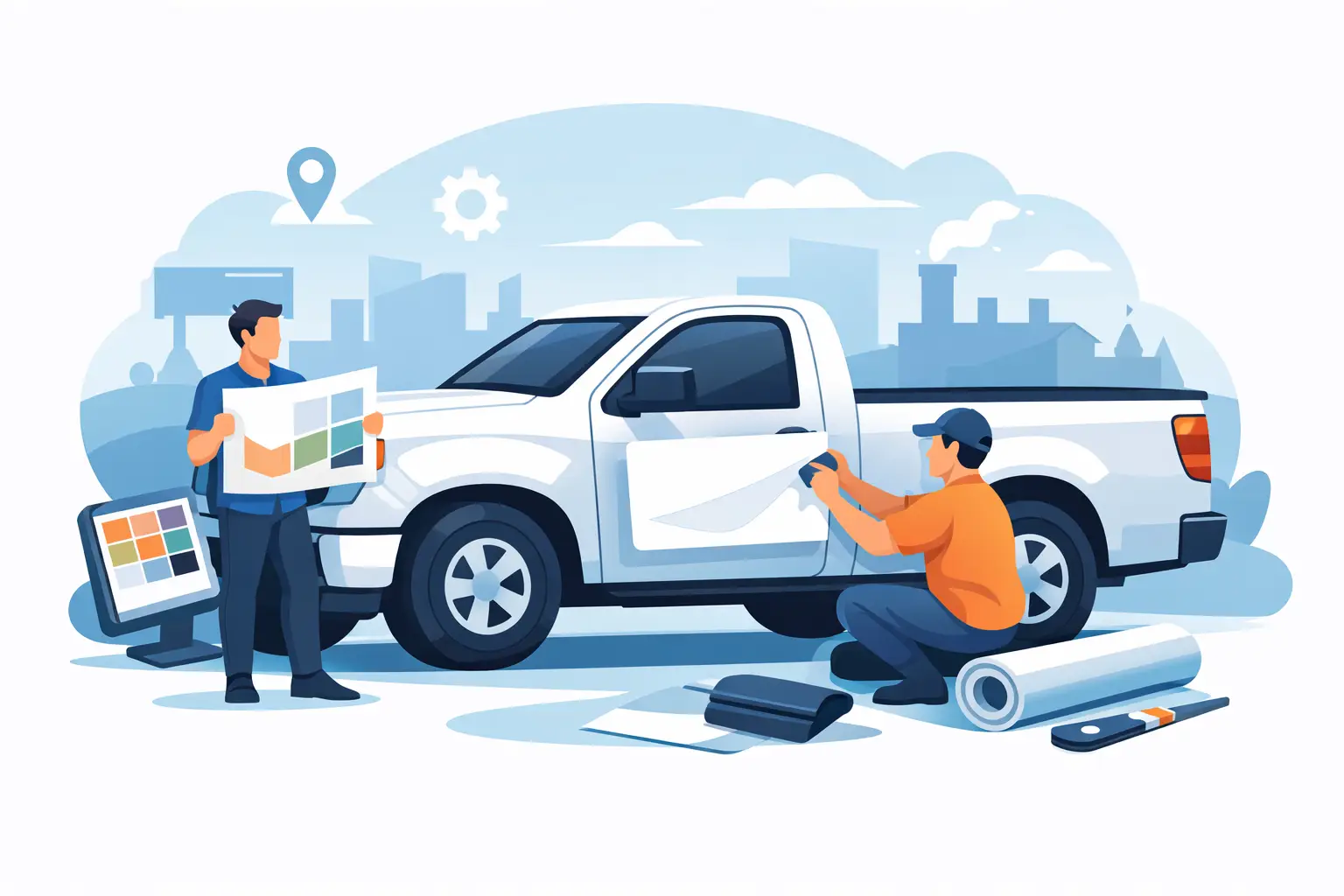
A truck door decal has one job – get seen fast and stay readable in the real world. That sounds simple until you are staring at a design screen wondering what size to choose, whether to use a logo, and how much information actually belongs on the door. If you are figuring out how to order truck door decals, the best results come from getting the basics right before you click buy.
Truck door decals are used for different reasons, and that changes what you should order. A contractor may need clean company identification and license numbers. A fleet manager may need consistent branding across multiple units. A truck owner may want custom door lettering for a personal build, work truck, or race support vehicle. The ordering process is easier when you know the decal’s job first, because that drives the size, material, layout, and level of detail.
How to order truck door decals without guesswork
Start with the door itself, not the artwork. Truck doors are not flat rectangles. Handles, body lines, trim, badges, and curves all affect how much usable space you really have. Measure the area where the decal will sit and leave breathing room around handles and edges. A decal that technically fits on paper can still look cramped once it is installed.
For most truck doors, width matters more than height. Lettering that is too tall can get crowded by mirrors, molding, or lower body contours. Lettering that is too narrow may disappear from a distance. If the goal is road visibility, a wider layout with strong spacing usually performs better than stacking too much information into a small block.
After measuring, decide what actually needs to appear on the decal. For a work truck, that often means company name, city and state, phone number, DOT number, and possibly a license or service category. For a custom or enthusiast truck, it may be a brand name, nickname, sponsor set, or stylized lettering. This is where many buyers make the first mistake – they try to put everything on the door.
A truck door is prime visual real estate, but it is still limited space. The more text you add, the smaller everything becomes. If your company name matters most, make that dominant. If compliance numbers are required, keep them legible and separate from decorative elements. If you are adding a logo, make sure it supports the design rather than competing with the text.
Choose the right truck door decal layout
The best truck door decals are built for quick reading. People see them in parking lots, job sites, traffic, and driveways, often at an angle and for only a few seconds. A clean one-line or two-line layout usually beats a crowded multi-element design.
Fonts matter more than most customers expect. Script styles can look great for certain brands or custom builds, but they are not always the best choice for legibility. Bold serif and sans serif fonts tend to read better from farther away, especially on work trucks. If you want personality, use it with control. A flashy font may work for a company name, but smaller details like phone numbers and DOT lettering should stay simple.
Color choice is just as practical. High contrast wins. Black on white, white on black, red on white, and other strong combinations tend to hold up best visually. Metallics, shadows, outlines, and specialty effects can add impact, but they should not make the lettering harder to read. There is always a trade-off between style and visibility.
If your truck already has a dark paint color, light vinyl will usually stand out best. If the truck is white or silver, darker lettering often creates the cleanest contrast. Printed full-color graphics can make sense when you need logos or image-based branding, but cut vinyl lettering is often the sharper and more durable option for straightforward door identification.
What information belongs on the door
Think in layers. The top layer is the main identifier – your company name, brand, or custom title. The second layer is supporting info such as your town, phone number, website name if part of the design, or service category. The third layer is regulatory or technical text, like USDOT numbers, MC numbers, or GVW-related markings when required.
Not every truck needs all three layers on the door. Sometimes the cleanest approach is to keep the door focused on the name and put secondary details elsewhere on the vehicle. That depends on your goals, your truck size, and whether the lettering is for compliance, promotion, or style.
Pick material that matches how the truck is used
Not all truck door decals live the same life. A personal pickup that stays clean and parked indoors does not put the same stress on vinyl as a job truck that sees sun, rain, wash cycles, mud, and daily use. Material choice should match the conditions.
For most truck doors, outdoor-rated vinyl is the baseline. It needs to handle UV exposure, weather, and regular washing. If you are ordering simple lettering or numbers, cut vinyl is usually the most durable and professional-looking option. It has no printed background, so the finish stays crisp and painted-on in appearance.
Printed decals are the better fit when your design includes gradients, complex logos, image elements, or multiple colors that would be difficult to layer. They offer more design freedom, but they can be a different product category than standard die-cut lettering. If you are ordering for a business fleet, consistency matters. Make sure all trucks use the same process, colors, and sizing standards.
Lamination may matter if the truck gets heavy exposure or frequent cleaning. It adds protection, but it can also affect cost and turnaround depending on the product. If longevity is a top priority, it is worth choosing materials built for long-term outdoor use rather than shopping only by price.
Prepare your design before you order
The easiest orders happen when the artwork is organized before you start customizing. Even if you are using an online design tool instead of uploading finished art, you should know your exact wording, preferred font style, color direction, and target size.
If you are uploading a logo, use the best file you have. Clean vector art is ideal because it scales without losing quality. Low-resolution screenshots and tiny web images often create problems, especially for printed decals. If your logo includes thin lines or small type, check whether those details will still read at the final size on the door.
Spacing is another detail buyers overlook. A truck decal is not a business card. Letters need room to breathe. Tight spacing can make words hard to read once installed, especially on curved doors. Good layout is not about cramming more in. It is about making the important parts obvious at a glance.
Common ordering mistakes to avoid
One of the biggest mistakes is guessing the size. Another is choosing a design based only on what looks good close up on a screen. Truck door decals need to work from a distance. If possible, visualize the layout on the actual truck dimensions before finalizing it.
Another common issue is forgetting surface interruptions. Door handles, trim pieces, fuel doors on adjacent panels, and body curves can break up the design. A layout that spans too close to these features can look uneven after installation.
Buyers also sometimes order decorative fonts for mandatory information. That can create readability problems and, in some cases, compliance headaches. Keep required lettering clear, straightforward, and sized appropriately.
Ordering for one truck vs a fleet
If you are ordering for one truck, you have more freedom to experiment with sizing and style. If you are ordering for multiple trucks, standardization becomes the priority. You want the same logo scale, same text treatment, same colors, and same placement on every unit.
That is especially true for contractors, service businesses, and fleet operators. A mismatched set of door decals makes the brand look patched together, even if each truck was lettered well on its own. Ordering with a repeatable spec saves time later when new vehicles are added.
For multi-truck orders, keep a written record of the exact layout details: width, color, font, spacing, and placement notes. That way the next truck matches the first one instead of becoming a close-enough version.
Before you place the order
Take one last pass through the practical details. Confirm left and right door needs, because mirrored placement and orientation can matter. Double-check spelling, numbers, capitalization, and abbreviations. If the truck needs regulatory text, verify it before production. Reprints caused by one wrong digit are avoidable and expensive.
It also helps to think about installation before ordering. Clean, flat application areas produce the best result. If your design is very large or layered, installation may take more care than a simple line of lettering. That does not mean you need to avoid a bigger design. It just means the order should match your comfort level and the truck surface.
A good truck door decal is not just custom. It is purposeful. When the size is right, the text is readable, and the material fits the job, the truck looks sharper and works harder at the same time. If you want the process to move fast without sacrificing control, eDecals.com gives you a straightforward way to build exactly what your truck door needs and get it on the road looking right.