
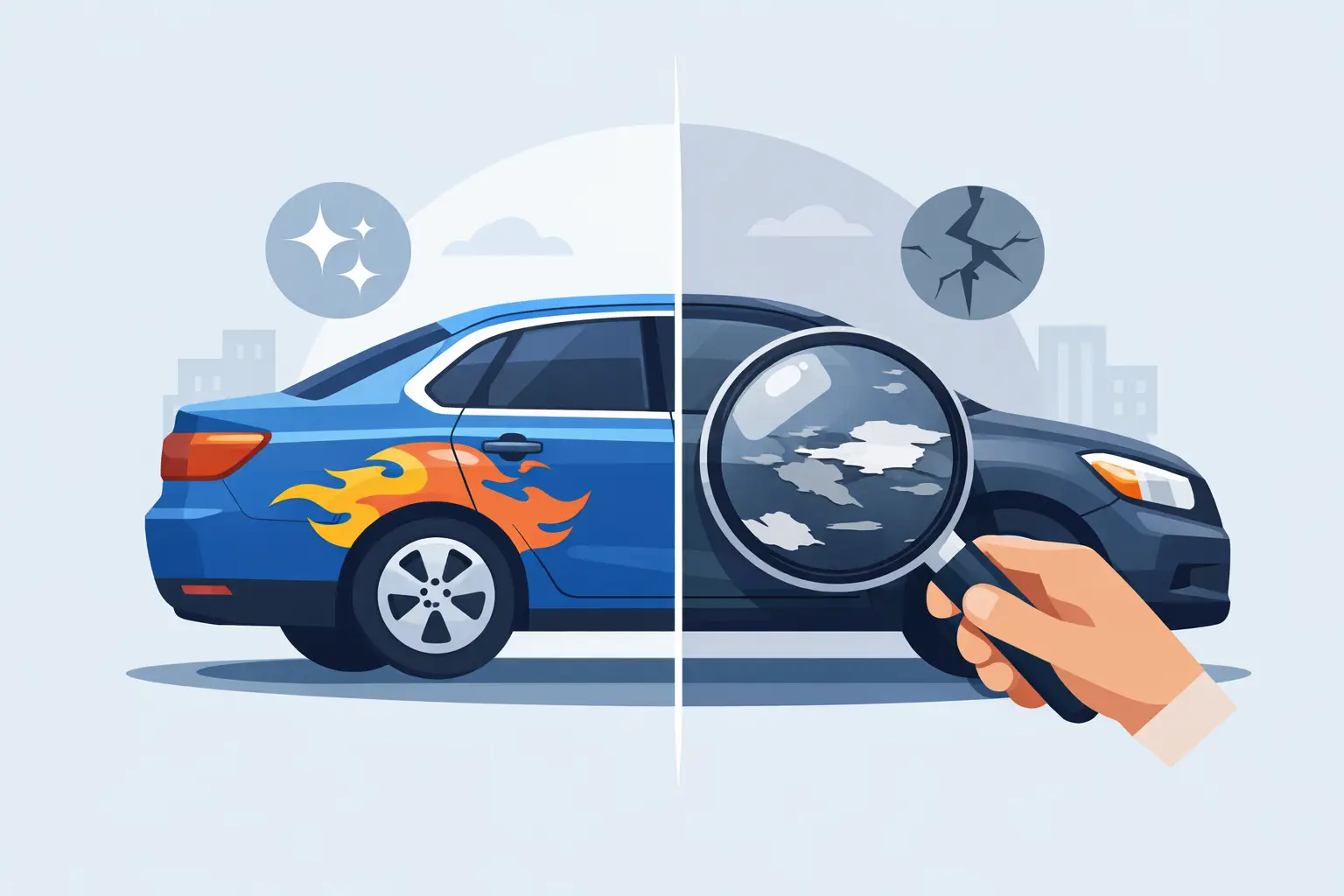
You like the look. You need the branding. You want the race number, windshield banner, or door lettering. Then the hesitation kicks in: can decals damage car paint? The honest answer is yes – but not in the way most people think, and not in every case.
A quality vinyl decal applied to a properly painted surface usually does not damage healthy factory paint. Most paint problems show up because of bad prep, poor paint condition, low-grade adhesive, or rough removal methods. If you know where the real risk comes from, decals are a practical, paint-safe upgrade for personal vehicles, work trucks, race cars, and fleet units.
Can decals damage car paint under normal use?
Most of the time, no. Automotive-grade vinyl is made to bond to painted surfaces without acting like permanent glue. On OEM paint that has fully cured and is still well attached to the panel, a decal should sit on the surface, hold through weather, and remove cleanly when handled correctly.
That said, there is a difference between not causing damage and revealing existing damage. If the paint underneath is already weak, chipped, oxidized, repainted poorly, or starting to fail, a decal can expose that problem during removal. In that case, the decal did not create a healthy paint problem from scratch. It found one.
This matters for older trucks, vehicles with bodywork history, and commercial units that have spent years in sun, salt, and road grime. The more questionable the paint, the more careful you need to be.
What actually causes paint damage?
The decal itself is usually not the villain. The bigger issues are surface condition, adhesive quality, and removal technique.
Weak or failing paint
If your clear coat is peeling, your paint is chalky, or the surface was resprayed without proper prep, the bond between paint and panel may already be compromised. A decal can stick better than the paint sticks to the vehicle. When that happens, removal may lift paint.
This is especially common on older repaints and budget body shop work. Factory paint is generally more durable and predictable than aftermarket paint jobs that were rushed or applied over poor prep.
Fresh paint that has not fully cured
New paint needs time to outgas and harden. Applying vinyl too soon can trap solvents and interfere with proper adhesion. Removing it later can also mark or pull the paint because the finish never fully stabilized.
If a vehicle has been recently painted, always confirm the cure window before applying graphics. Waiting is cheaper than repainting a door.
Cheap decal material or aggressive adhesive
Not all decals are built the same. Low-grade vinyl can harden, shrink, crack, or leave behind stubborn adhesive. Some bargain materials also use adhesive systems that are less forgiving over time, especially in heat.
For long-term vehicle use, material quality matters. Better film lays flatter, weathers better, and removes more predictably.
Improper removal
This is where a lot of paint damage happens. People grab a corner and rip the decal off cold, fast, and at the wrong angle. That puts sudden force on the paint and clear coat.
Vinyl should be warmed, lifted gradually, and peeled with control. Done right, removal is usually straightforward. Done wrong, even decent paint can end up with trouble.
Sun fade, ghosting, and the paint mismatch issue
One thing people often call damage is actually uneven aging. The paint under a decal is protected from UV exposure, while the surrounding paint keeps fading. Once the decal comes off, you may see a shadow or outline.
That is not adhesive damage. It is a color difference caused by sun exposure and oxidation. Red, black, and darker colors tend to show this more, especially on older vehicles parked outdoors.
On white work trucks and fleet vans, the effect may be minor. On an older daily driver with years of sun, it can be obvious. If the vehicle already has oxidation, the contrast after removal may stand out until the paint is corrected.
Are decals safer than wraps for paint?
Neither is automatically safer or riskier. The condition of the paint matters more than the coverage area. A small door decal on failing paint can cause issues, while a large wrap on sound factory paint can remove cleanly.
The main difference is exposure. A full wrap protects more of the painted surface from UV, while uncovered areas continue aging. That can make color mismatch more noticeable when the wrap is eventually removed. Smaller decals create the same effect, just on a smaller footprint.
For branding, compliance lettering, race numbers, and custom graphics, decals are often the more practical choice because they give you precise placement without covering the whole vehicle.
How to apply decals without harming the finish
If you want the best chance of clean performance now and clean removal later, application matters.
Start with a clean, stable surface
Wash the area thoroughly and remove wax, grease, and road film. A decal should bond to paint, not to contamination. If the surface feels chalky or the clear coat is flaking, stop there. The paint needs attention before graphics go on.
Avoid damaged or questionable paint
Do not apply vinyl over peeling clear coat, rust bubbles, cracked paint, or bargain repaint work you do not trust. The decal may hold for a while, but removal becomes a gamble.
Respect cure time on repainted vehicles
If a panel was recently painted, confirm it is fully cured before installation. Cure time varies based on paint system, shop conditions, and whether the job was baked or air dried.
Use the right material for the job
Vehicle lettering, windshield decals, racing numbers, and commercial graphics all place different demands on vinyl. Choosing automotive-grade film designed for outdoor use gives you better adhesion, cleaner edges, and less trouble later.
That is one reason buyers who want dependable vehicle graphics tend to use established manufacturers rather than generic sticker stock. At eDecals.com, the focus is on purpose-built lettering and graphics for real vehicle use, not one-size-fits-all labels.
How to remove decals without damaging car paint
If you are changing branding, updating styling, or selling the vehicle, removal is the moment that matters most.
Use heat, but not too much
A heat gun on low or a hair dryer helps soften the vinyl and adhesive. You want the decal warm, not scorching. Excess heat can damage paint or make adhesive smear.
Peel slowly at a low angle
Lift a corner and pull the decal back over itself rather than straight away from the panel. Slow, steady pressure is better than force. If the vinyl tears, reapply a little heat and keep working in small sections.
Remove leftover adhesive carefully
Some residue is normal, especially on older decals. Use an adhesive remover made for automotive surfaces and test it first if the paint condition is uncertain. Avoid harsh scraping tools or aggressive solvents that can dull or stain the finish.
Wash and inspect the area
After removal, clean the panel and check for ghosting, oxidation difference, or paint defects that were hidden by the decal. Sometimes the fix is as simple as polishing the surrounding area to blend the finish.
When you should think twice before applying decals
There are a few situations where caution is smart. If the vehicle has failing clear coat, mystery bodywork, fresh paint, heavy oxidation, or visible rust starting under the finish, vinyl may not be your best next step. The same goes for collectible vehicles where preserving a fragile original finish matters more than adding graphics.
For everyone else, decals are a proven solution. Contractors use them for door lettering and DOT numbers. Enthusiasts use them for windshield banners and body graphics. Racers use them for numbers and sponsor layouts. Boat owners and off-road drivers do the same on their equipment because good vinyl is made for outdoor abuse and practical customization.
So, can decals damage car paint?
They can, but usually only when the paint is already compromised, the material is poor, or the removal is rushed. On a sound, fully cured painted surface, quality decals are generally safe and effective. The bigger risk is not the graphic – it is ignoring the condition of the surface underneath.
If you want graphics that look sharp, hold up outdoors, and come off with fewer surprises, start with quality vinyl, match the material to the job, and treat installation and removal like part of the product. A little care on the front end saves a lot of regret when it is time for the next design.