
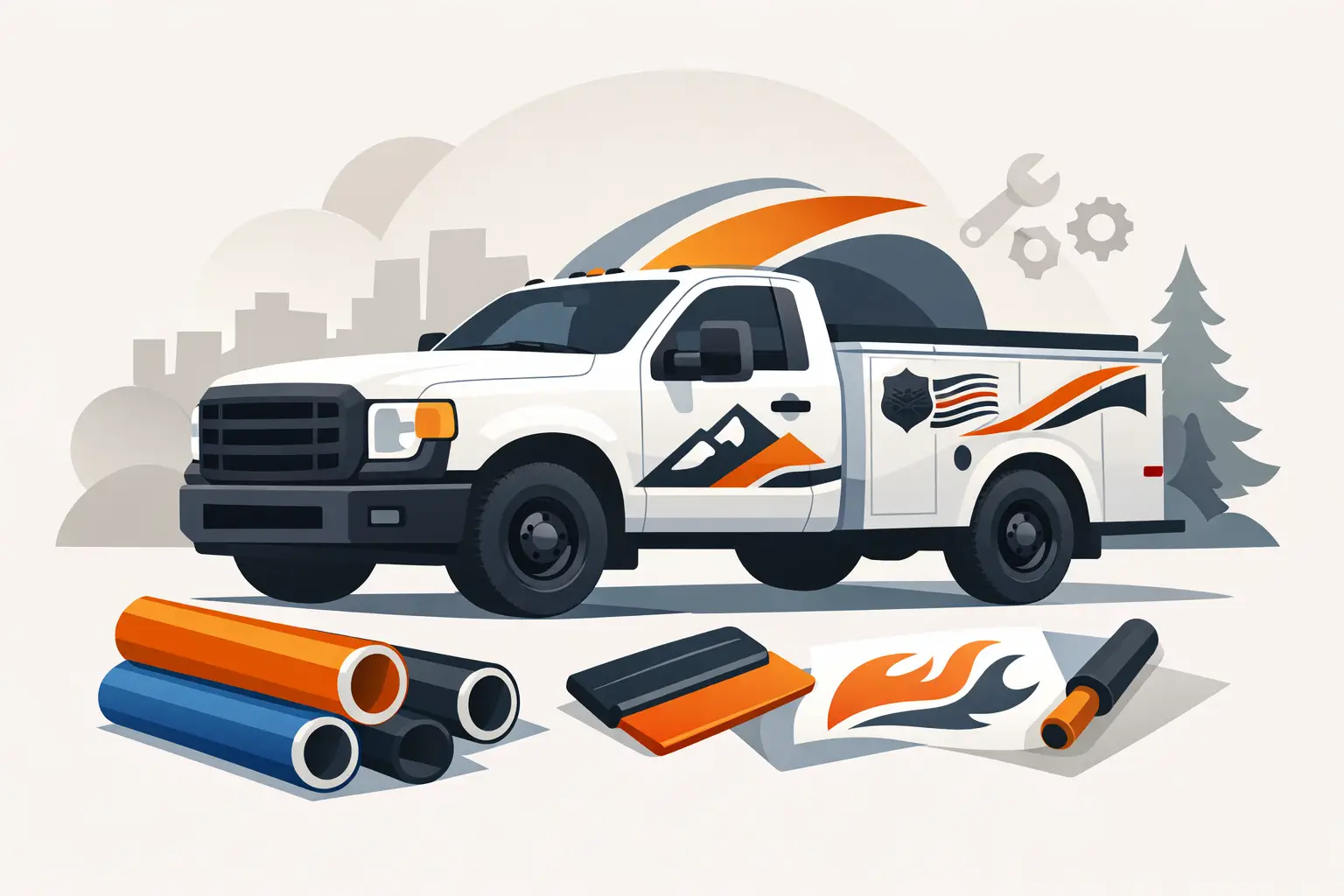
A work truck gets judged fast. Before a customer sees your bid, your crew, or your work, they see the doors, the tailgate, and whether your lettering looks sharp or slapped on. That is why choosing the best vinyl decals for work trucks is not just about appearance. It affects visibility, credibility, compliance, and how well your branding holds up in real jobsite conditions.
If you run one truck or a full fleet, the right decal setup should do three things well. It should be easy to read from a distance, built to handle sun and weather, and sized for the vehicle without looking crowded. Cheap graphics miss at least one of those marks. Better decals keep your truck looking professional while doing the practical work of advertising your business every day.
What makes the best vinyl decals for work trucks?
The best vinyl decals for work trucks are not always the flashiest ones. In most cases, the strongest choice is clean cut lettering or well-designed printed graphics made from outdoor-rated vinyl with the right adhesive for painted metal, glass, and smooth vehicle surfaces.
Durability comes first. A work truck sits in the sun, gets washed, picks up dust, and sees everything from freezing mornings to hot pavement. If the vinyl is too thin, the adhesive is weak, or the material is not meant for vehicle use, the edges start lifting early. Fading is another common failure point, especially on darker trucks or vehicles parked outdoors all day.
Readability matters just as much. Script fonts may look good on a business card, but they often fail on a moving vehicle. Bold fonts, strong contrast, and sensible spacing usually perform better. A contractor driving through a neighborhood or parked at a supply house needs lettering that can be read in seconds.
Then there is fit. What works on a pickup door may not work on a service body, utility truck, or enclosed work van. Good decals are not one-size-fits-all. They should be sized to the panel area and laid out around handles, trim, fuel doors, and body lines.
The decal types that work best on trucks
For most commercial trucks, simple lettering is still the most useful format. Company name, phone number, website, city, license numbers, and service type can all be arranged cleanly on the doors or side panels. Cut vinyl lettering stays popular because it looks crisp, installs cleanly, and avoids the heavy background block that can make a truck look cluttered.
Printed decals are the better fit when you need logos, gradients, detailed artwork, or full-color branding. They give you more visual range, but they also require smarter design. Too much detail can disappear at a distance. For work trucks, strong printed graphics usually win when they keep the message simple and the logo large enough to read.
Reflective decals are worth considering if your truck is parked roadside, works early mornings, or operates at night. They cost more than standard vinyl, so they are not always necessary for every business. But for towing, utility service, roadside repair, and some contractor fleets, the extra visibility is a practical upgrade.
Magnetic signs come up often in this conversation, but they are not the same thing as vinyl decals. They can be useful if you switch vehicles or want removable branding, though they are more vulnerable to shifting, theft, and edge wear. If the truck is dedicated to your business, vinyl decals usually look more professional and hold up better over time.
Best vinyl decals for work trucks by use case
The right setup depends on how your truck earns its keep.
For local contractors, door lettering is usually the best first move. It gives you a clean, professional look with the basics customers need to remember your business. Add a rear window or tailgate decal if you want more visibility in traffic or while parked.
For service companies such as HVAC, plumbing, landscaping, pest control, and electrical, larger side graphics can be worth it. These trucks spend a lot of time in neighborhoods, driveways, and commercial lots where side exposure matters. A larger layout gives you room for branding and a short service list without making the truck look overloaded.
For fleet operators, consistency matters more than creative variation. The best results come from standardizing logo placement, lettering size, color use, and compliance markings across every vehicle. A uniform fleet looks established and makes replacement ordering much easier.
For owner-operators or independent tradespeople, there is often a balance between budget and impact. You may not need a partial wrap or full printed package. Clean custom lettering, DOT numbers if required, and a strong logo can do the job well without overbuilding the design.
Material and adhesive choices matter more than most buyers think
Two trucks can have graphics that look nearly identical on day one and look completely different six months later. The difference is usually the vinyl grade, the film type, and the production quality.
Calendared vinyl is commonly used and can be a solid choice for many work truck applications, especially flat or slightly curved surfaces. Cast vinyl is generally the premium option for longer life, better conformability, and cleaner performance on curves or contours. If your truck has complex body shapes or you want the longest service life, stepping up in material can make sense.
Adhesive quality matters too. A decal has to hold through weather, washing, and daily wear, but it also needs to install correctly without unnecessary frustration. Poor adhesive can lead to lifting, bubbling, or early failure. Good production and proper surface prep make a major difference here.
Lamination is another factor for printed decals. If your design uses full color or detailed printing, laminate helps protect against UV exposure, abrasion, and fading. It adds value because it extends the useful life of the graphic in the field.
Design mistakes that make work truck decals underperform
The most common mistake is trying to say too much. A truck is not a brochure. If the side panel is packed with services, taglines, social icons, and tiny contact details, the main message gets lost.
Too little contrast is another problem. Gray on silver, black on dark blue, or red on maroon may look subtle up close, but subtle is not what you want on a working vehicle. Strong contrast wins because people read it quickly.
Undersized lettering is a frequent issue, especially with DOT and regulatory markings. If lettering barely clears the minimum requirement, it may still be hard to read in real conditions. Slightly larger is often the smarter call.
Placement can also hurt the result. Decals should work with the truck body, not fight it. Door seams, rivets, handles, trim lines, and curved fenders all affect how the finished layout reads. A good design accounts for those interruptions before production, not after installation.
How to choose the right decal package
Start with function. Ask what the truck must do first. If it needs to meet commercial marking requirements, compliance lettering comes before decorative graphics. If the truck is your main local advertising tool, visibility should drive the design.
Next, think about the vehicle itself. A white pickup gives you a different design range than a black utility truck or a red flatbed. Color contrast, available panel space, and surface type all shape what will work best.
Then decide how permanent the branding should be. For long-term business use, professionally produced vinyl decals are usually the best investment. If the truck may be sold soon or branding changes often, you may want a simpler setup that is easier to replace.
This is where customization matters. Being able to set font, color, size, layout, and effects yourself is a major advantage because you can build decals around your exact truck and business needs instead of settling for generic templates. That is one reason many buyers prefer a specialized source like eDecals.com when they want work truck graphics that look dialed-in instead of improvised.
Installation affects the final result
Even great vinyl can fail if the install is rushed. The truck surface needs to be clean, dry, and free of wax, dirt, and residue. Temperature matters too. Installing in poor conditions can affect adhesion and make alignment harder.
Straight placement is the difference between professional and amateur. Crooked door lettering stands out immediately, and not in a good way. If you are installing decals yourself, take time to measure, tape guides, and check spacing before removing the backing.
If your graphics package is larger or more complex, professional installation may be worth it. That is especially true for fleets, printed panels, or trucks with contoured body sections. The savings from DIY can disappear fast if a large graphic has to be reordered.
What buyers should look for before ordering
Look for outdoor-rated materials, clear sizing options, and enough customization control to match your truck layout. Make sure the product is intended for vehicle use and not just general sticker application. If you need compliance markings, confirm the lettering can be ordered to the proper height and style.
It also helps to buy from a company that actually understands commercial graphics, not just novelty decals. Work truck lettering has different demands than a decorative window sticker. It needs to perform in traffic, on jobsites, and in weather while still representing your business well.
The best work truck decals do not need to be complicated. They need to be durable, readable, and designed for the way your vehicle is actually used. When those pieces line up, your truck stops looking like just another vehicle and starts working harder every mile it drives.
If you are ordering graphics for a truck that earns money, think beyond what looks good on screen. Choose the decals that will still read clearly, stay put, and make your business look solid after months of real use.