
Your truck door has a job to do before the engine ever starts. It identifies your operation for inspectors, customers, and other drivers on the road. Well-made USDOT decals make that information clear, professional, and built for the miles ahead – not faded, peeling, or hard to read after a season of work.
For owner-operators, contractors, delivery businesses, and fleet managers, the goal is simple: display the required information in a format that is readable, durable, and suited to the vehicle. The details matter, from the lettering height and color contrast to the surface preparation and placement on each side of the power unit.
What USDOT Decals Are Used For
USDOT decals display a carrier’s assigned USDOT number, commonly alongside the legal business name or a trade name. They are used to identify commercial motor carriers regulated by the Federal Motor Carrier Safety Administration. For many interstate commercial operations, the vehicle must show the carrier’s name and USDOT number on both sides of the power unit.
The decal itself does not create compliance. Your operating authority, registration status, insurance, vehicle classification, cargo, and where you operate all affect what rules apply. But once your business is required to display a USDOT number, clear vehicle lettering is a visible part of staying ready for roadside inspections.
Federal marking rules generally require the information to be legible during daylight hours from 50 feet away while the vehicle is stationary. State and local requirements may add their own rules, especially for intrastate carriers. If you run a pickup with a trailer, a box truck, a cargo van, a dump truck, or a larger fleet vehicle, confirm the rules that apply to your operation before ordering.
Choosing the Right Size for USDOT Decals
There is no single magic letter size that works for every truck. A large tractor door gives you room for bold 3-inch or 4-inch lettering. A compact cargo van, pickup door, or service body may need a tighter layout that still remains easy to read. The best size is the one that fits your available panel area without sacrificing contrast or legibility.
Start by measuring the flat space where the decal will go. Avoid door handles, body lines, fuel doors, reflectors, hinges, and heavily curved sections. Leave enough room around the lettering so the copy does not look crowded or get broken up by the vehicle hardware.
For most commercial vehicles, simple block lettering is the practical choice. Script fonts, outlines, shadows, and specialty effects can look great on a show truck, but compliance copy should be read quickly from a distance. If you want a more customized look, use a strong, clean font for the USDOT number and save the decorative styling for your company logo, truck name, or secondary graphics.
Contrast beats color preference
A favorite brand color is not always the right lettering color for the truck. Dark lettering works well on white, silver, yellow, and other light-colored doors. White, light gray, or bright colors typically stand out better on black, dark blue, burgundy, or dark green vehicles.
The key is visible contrast in real working conditions. Consider how the lettering looks in direct sun, on an overcast day, and when the truck is covered with road dust. Gloss vinyl delivers a clean finish, while matte surfaces can reduce glare in certain applications. Either can work if the lettering remains sharp and readable.
Where to Place Commercial Truck Lettering
The standard location for USDOT decals is on both sides of the power unit, usually on the front doors. Door placement is easy for enforcement personnel to find, easy for customers to identify, and generally provides a smooth panel for vinyl application.
Not every vehicle has conventional front doors. On vans, cab-over trucks, service bodies, and specialty work vehicles, use the most visible practical side panel near the front of the vehicle. The lettering should not be hidden by ladders, equipment racks, sliding-door seams, toolboxes, or open doors.
Keep the layout organized. Put the company name on one line and the USDOT number below it, or use a clear two-line arrangement that can be read at a glance. Adding other information, such as a city and state, phone number, MC number, contractor license number, or website, can make sense for marketing. Just do not shrink the required identification into an unreadable block to fit every detail on the door.
Vinyl That Holds Up to Work Trucks
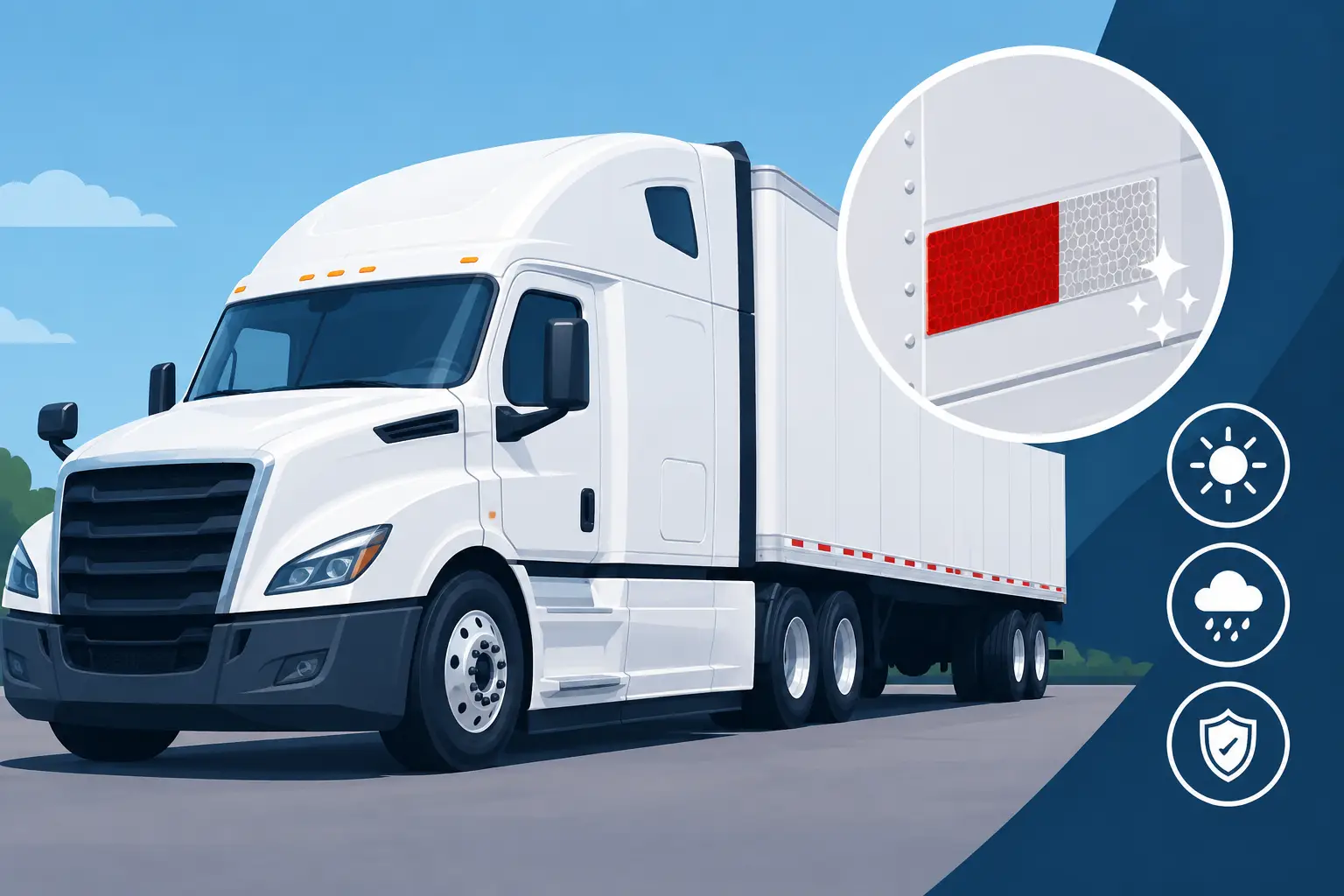
Commercial lettering faces conditions that personal vehicle decals may never see: highway speed, diesel residue, pressure washing, jobsite dirt, salt, rain, heat, and constant UV exposure. Material quality matters because replacing failed lettering costs time and makes a working vehicle look neglected.
Permanent adhesive vinyl is a smart fit for most commercial applications. It conforms well to properly prepared painted metal and smooth vehicle surfaces, while outdoor-rated color helps the graphic keep its appearance over time. For temporary identification, removable materials can be useful, but they are not the default choice for a truck that works every day.
Magnetic signs have their place for temporary branding or vehicles used for mixed personal and business purposes. They are not always the best answer for required identification. Magnets can shift, get removed, or be left off after washing. If your operation needs permanent, consistent side markings, self-adhesive USDOT decals are usually the more dependable option.
Apply Your Decals to a Clean Surface
Even high-quality vinyl needs a clean foundation. Wash the application area thoroughly, then remove wax, grease, silicone, and road film with an appropriate surface cleaner. Let the panel dry completely before installation. Do not apply lettering over damaged paint, chalky oxidation, fresh ceramic coating, or a surface that has not fully cured after painting.
Temperature matters, too. Vinyl applies best within the manufacturer’s recommended temperature range. Cold panels can reduce initial adhesion, while extreme heat can make handling more difficult. If you are lettering multiple fleet vehicles, setting up a clean indoor application area can save time and produce a more consistent result.
Take your time aligning the copy. A crooked USDOT number is hard to ignore once it is on the road. Use masking tape as a hinge, step back before committing to placement, and apply steady pressure across the lettering. For longer graphics, work gradually from one side to the other to reduce bubbles and wrinkles.
What to Include Before You Order
Before designing your lettering, verify the exact information you need displayed. Use the USDOT number assigned to your business or the carrier whose authority is being used, as applicable to your operating arrangement. Owner-operators leased to a carrier may need to follow the carrier’s marking requirements rather than display their own information alone.
Check spelling, spacing, and number sequence carefully. A single wrong digit creates a decal that looks finished but does not identify the right operation. If you are ordering for several trucks, standardize the font, color, size, and placement. Consistent fleet lettering looks professional and makes future replacements faster.
At eDecals.com, you can build commercial lettering to match your available door space, select a high-contrast color, and create matching sets for multiple vehicles. That control is useful whether you are lettering one service van or organizing graphics for an entire work fleet.
Make the Door Work Harder
Your USDOT number may be required, but the door space around it can still support your business. Clean company lettering tells customers who arrived at the jobsite, gives your crew a more established appearance, and keeps every vehicle looking like part of the same operation.
Choose readable copy, durable vinyl, and a layout that fits the vehicle instead of forcing too much information into too little space. When the truck rolls out tomorrow morning, your identification should already be doing its job.