
A trailer can look ready for work, racing, or a weekend at the lake and still be missing information required for the road. Trailer decal requirements are not one universal checklist. They depend on your trailer’s use, weight rating, where it is registered, what it carries, and whether it operates as part of a commercial business.
The good news is that most personal-use trailers need far less lettering than commercial equipment. The key is separating legally required identification and safety markings from the custom graphics that make your trailer look professional, recognizable, and easy to spot.
Start With the Trailer’s Job
Before designing a decal, define how the trailer is used. A small utility trailer pulled for home projects has different requirements than an enclosed contractor trailer, a race trailer, a boat trailer, or a commercial flatbed crossing state lines.
For many privately owned trailers, the basic legal items are the registration plate and any registration validation sticker required by the state. Some states place renewal decals directly on the plate, while others issue a separate sticker or have moved to electronic registration systems. Rules also vary for trailers under a certain weight, homemade trailers, and trailers used only on private property.
Commercial use changes the equation. A trailer used in a business may need company identification, state-level carrier information, or safety markings depending on the vehicle combination. A trailer does not become exempt simply because it is smaller or enclosed. What matters is how it is operated, its rating, the total combination weight, and the rules in the states where it travels.
Check your current registration documents and state motor vehicle guidance before ordering compliance lettering. A clean custom decal is easy to install. Correcting the wrong legal number after it is applied is a job nobody needs.
Trailer Decal Requirements: Registration and Identification
Registration markings come first because they are the most common trailer requirements. Your plate must remain visible, securely mounted, and illuminated where required. Do not cover the plate, registration sticker, VIN plate, lights, reflectors, or manufacturer labels with decorative vinyl.
The manufacturer’s certification label is especially important. It normally identifies details such as the VIN, date of manufacture, tire and wheel information, and GVWR. This is not a style decal to replace with a custom version. If it is damaged or missing, contact the trailer manufacturer or the appropriate state agency for the proper replacement process.
A custom ownership decal can still be useful. Your name, phone number, fleet unit number, trailer name, or equipment ID can help identify a trailer at a jobsite, campground, storage lot, track, or marina. These are often optional, but they can save time when several similar trailers are parked together.
For business trailers, use lettering that can be read quickly from a reasonable distance. Company names and unit numbers work best when they are placed on a flat, high-visibility panel such as the front half of an enclosed trailer side or a clean section of the tongue box. Avoid placing key information across rivets, hinges, door seams, latches, or corrugated areas where the graphic cannot fully bond.
Commercial Lettering Is Not One-Size-Fits-All
A contractor trailer with a logo and phone number may look commercial, but appearance alone does not determine federal motor carrier requirements. Commercial registration, USDOT marking rules, interstate operations, vehicle weight, and cargo type each have their own standards.
When a USDOT number is required, it is generally displayed on the power unit, not simply on the trailer. Federal marking rules commonly apply to the commercial motor vehicle that is operating the combination, and the carrier name and USDOT number must be legible from the required viewing distance. State requirements can also apply to intrastate carriers, even if the truck and trailer never cross a state line.
That distinction matters when ordering decals. Putting a USDOT number on an enclosed trailer may support consistent fleet branding, but it does not replace required markings on the truck. If your operation is regulated, confirm exactly which vehicle needs the lettering, which legal name must appear, minimum letter height, contrast requirements, and whether your state requires additional credentials.
For most small businesses, it makes sense to separate compliance lettering from promotional graphics. Keep the legal company name, identification number, and unit number simple and high contrast. Then use larger branded graphics elsewhere for services, phone numbers, and the look you want customers to remember.
Safety Markings May Matter More Than Decorative Decals
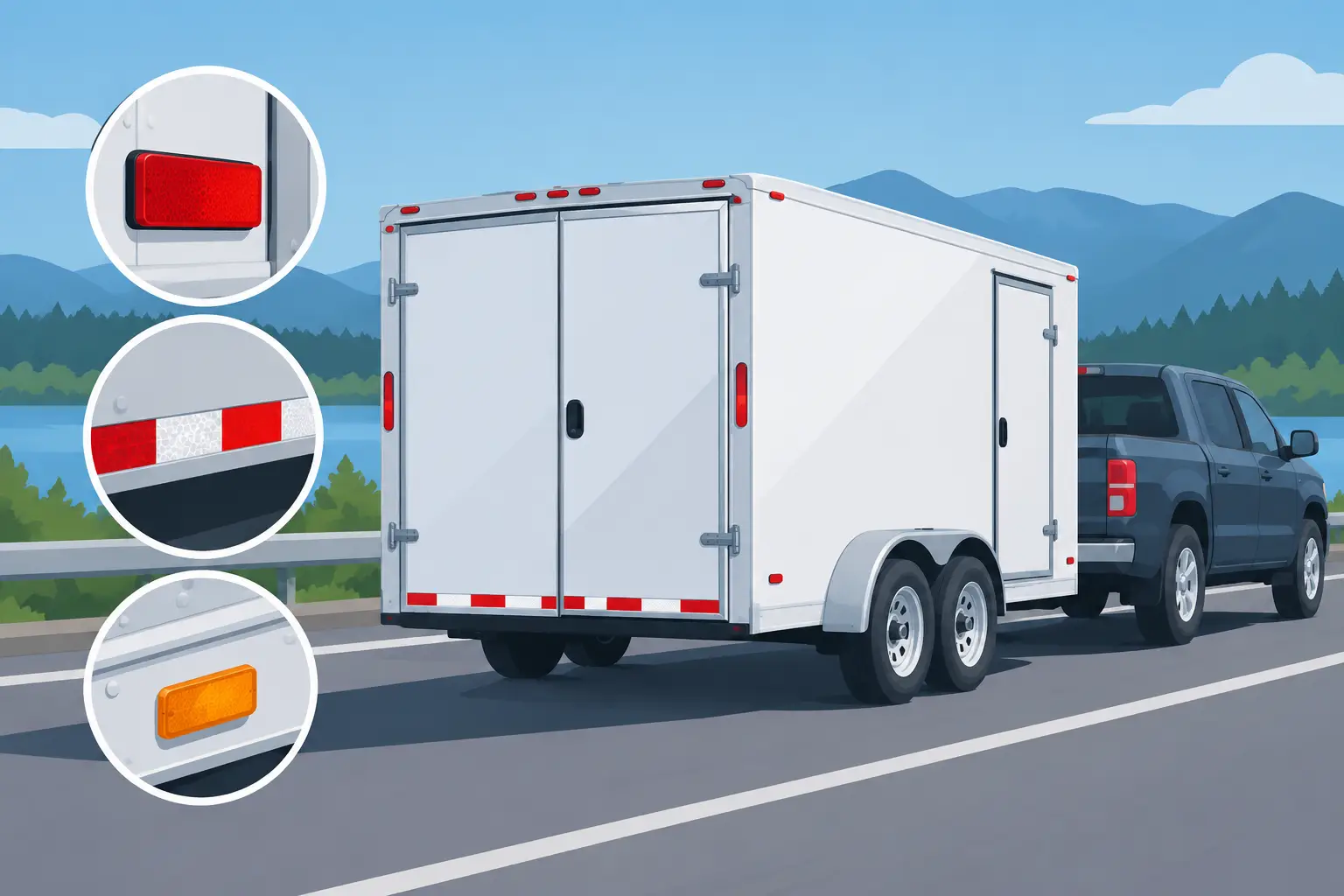
Some trailer markings are safety equipment, not optional graphics. This includes reflectors, required lighting, and, on certain larger trailers, retroreflective conspicuity tape. Conspicuity treatments use red-and-white reflective material positioned along the sides and rear to improve visibility at night.
Federal requirements may apply to trailers with an overall width of 80 inches or more and a GVWR over 10,000 pounds, along with other equipment categories and exceptions. Placement, length, color pattern, and material performance matter. A regular vinyl stripe, even in red and white, is not the same thing as compliant reflective sheeting.
Do not cover existing reflective tape or lights with full-color wraps, printed decals, or oversized graphics. On an enclosed trailer, plan the design around these areas from the beginning. A sharp layout can frame the tape and lights rather than fighting them.
Hazardous-material placards are another separate category. If you haul regulated hazardous materials, placards are governed by specific transportation rules covering design, size, location, and visibility. A custom decal should never be used as a substitute for a required hazmat placard.
Choose Lettering That Holds Up on the Road
Once you know what must be displayed, make the finished lettering practical. Trailer graphics deal with sun, rain, road grit, fuel residue, pressure washing, vibration, and constant airflow. Cheap material or poor placement can turn crisp lettering into curled edges and faded colors fast.
For permanent identification and business graphics, outdoor-rated adhesive vinyl is the right starting point. High-contrast color combinations give the best readability: black on white, white on black, white on dark blue, or black on bright yellow are proven choices. Script fonts can look great for a trailer name or race team identity, but legal numbers and phone numbers should use a cleaner, bolder style.
Size depends on the purpose. A fleet unit number only needs to be readable nearby. A phone number intended to generate calls from traffic needs to be much larger. If lettering has a legal minimum height, follow that requirement first, then increase the size if the trailer has room.
Measure the usable panel, not the trailer’s overall length. Account for wheel wells, trim, windows, doors, vents, lighting, rivet rows, and curved corners. On open utility trailers, smooth painted surfaces, tongue boxes, fenders, and solid side panels are usually the best decal locations. On textured powder-coated surfaces, adhesion can vary, so a test piece is smart before committing to a large graphic.
Install on a Clean, Stable Surface
A decal is only as durable as the surface beneath it. Wash the installation area thoroughly, remove road film and wax, and let it dry completely. For best adhesion, use an appropriate final cleaner that leaves no oily residue. Fresh paint needs adequate cure time before vinyl is applied.
Install when temperatures are moderate and the trailer surface is dry. Avoid applying graphics in direct blazing sun, during freezing conditions, or over damp metal. Work from the center outward, keep the decal aligned with masking tape before removing the backing, and use firm pressure to prevent trapped air.
Give the adhesive time to set before aggressive washing or long exposure to heavy rain. If you use a pressure washer, keep the spray back from decal edges and avoid directing the stream under the vinyl.
Build a Trailer That Looks Ready for Business
The best trailer graphics do two jobs at once: they meet the requirements that apply to your equipment and make the trailer easier to identify, market, and manage. A simple utility trailer may only need a visible plate and a clean ownership ID. A contractor trailer may need clear business lettering and fleet numbers. A larger commercial trailer may require regulated safety treatments in addition to its branding.
When you are ready to add the non-regulated lettering, eDecals.com makes it easy to build custom names, numbers, business information, and trailer graphics in the size, color, and layout your trailer needs. Start with the rules, measure the available space, and make every decal earn its place on the road.