
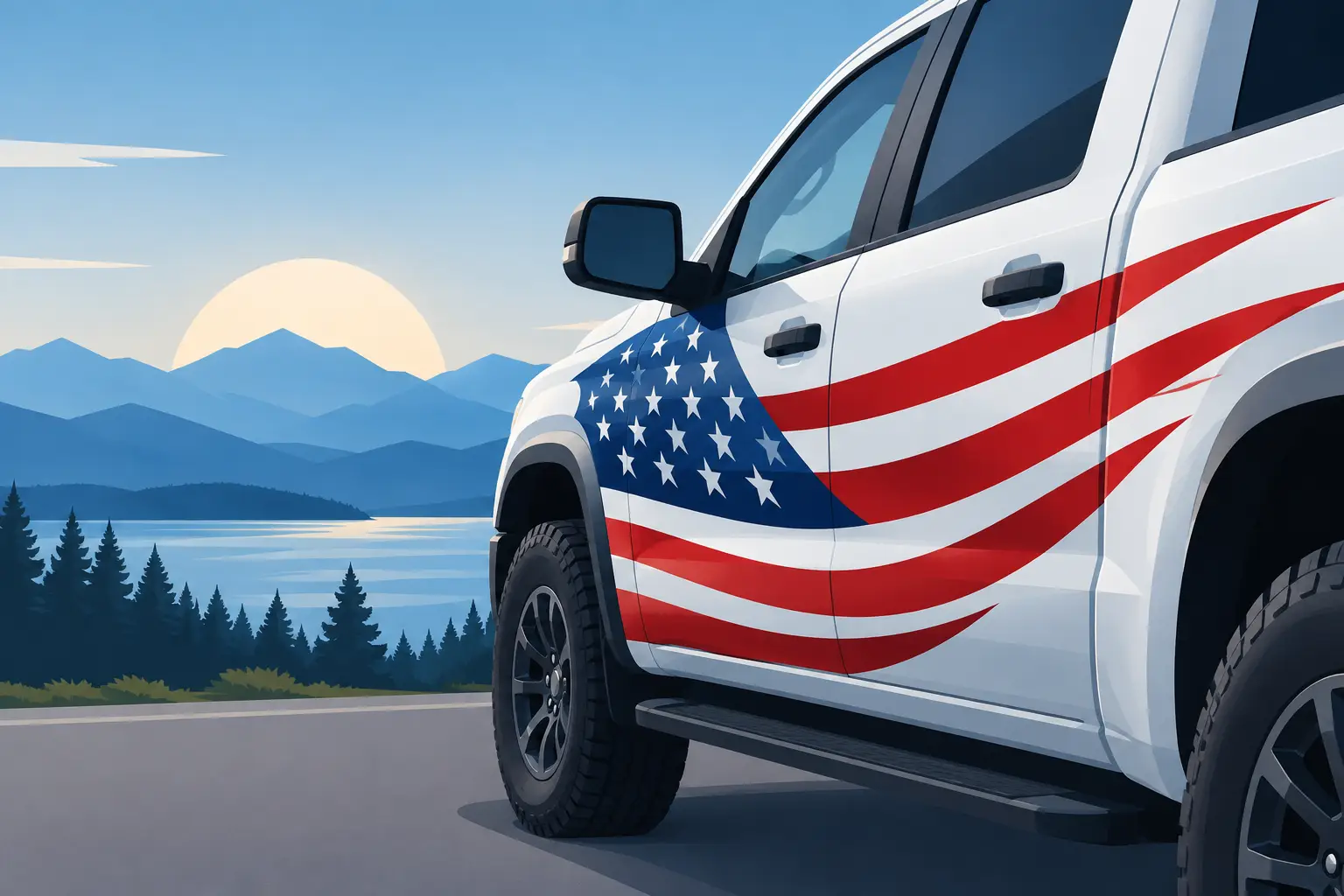
A flag graphic on a work truck has to handle more than a few parking-lot compliments. It faces highway grit, rain, UV exposure, wash soap, and daily use. That is why patriotic vehicle decals should be chosen like any serious vehicle graphic: with the right material, a clear design, and a placement that fits the vehicle instead of fighting it.
Whether you are outfitting a pickup, Jeep, race car, motorcycle, RV, boat, or service fleet, patriotic graphics can add identity without turning the vehicle into visual clutter. The best results come from matching the decal style to the surface, the purpose, and the amount of attention you want it to command.
Start With the Job Your Decal Needs to Do
Patriotic graphics are not all meant to work the same way. A subtle black-and-gray American flag on the rear window of a daily driver has a different job than a full-color stars-and-stripes graphic on a show truck. A veteran-owned contractor may want a flag paired with business lettering, while a race team may need a bold design that still leaves room for numbers, sponsors, and required identification.
Before choosing artwork, decide whether the decal is mainly decorative, personal, commemorative, or commercial. That decision affects size, color, finish, and location. It also keeps a good idea from becoming an oversized graphic that competes with the rest of the vehicle.
For a clean, practical look, use one strong patriotic element and let it carry the design. A flag, star, eagle, military branch emblem, red-white-and-blue stripe, or distressed USA lettering can stand on its own. Combining several themes can work on a larger trailer or RV, but on a truck door or motorcycle fairing, restraint usually looks more professional.
Choose Patriotic Vehicle Decals by Vehicle Type
The right decal layout depends heavily on the available panel space. Flat, uninterrupted surfaces give you more flexibility. Curves, seams, hinges, rivets, and compound body lines require tighter designs and careful measuring.
Trucks and Jeeps
Pickup trucks offer some of the best real estate for patriotic graphics. Rear windows, bed sides, tailgates, lower doors, and hood sections can all support a design. A rear-window flag decal delivers visibility without taking up painted body panels, while a bed-side graphic can create a more custom, built-for-the-road appearance.
For off-road trucks and Jeeps, matte black, charcoal, or subdued tactical flag styles often fit the vehicle’s hardware and aggressive stance. Full-color flags work especially well on clean white, black, silver, and dark blue vehicles, where red and blue have enough contrast to stay readable from a distance.
Cars and Performance Vehicles
Cars typically benefit from smaller, intentional graphics. Consider quarter-window decals, windshield banners, rear glass graphics, rocker-panel accents, or a centered trunk decal. A large door graphic can work on a track car or show build, but it should be planned around racing numbers, sponsor decals, and body contours.
If the car has a polished or modern appearance, clean-cut stars, stripes, and crisp lettering usually look better than heavily distressed artwork. Distressed styles are a natural fit for lifted trucks, classic muscle cars, rat rods, and utility trailers where a weathered, hard-working finish is part of the look.
Boats, RVs, Motorcycles, and ATVs
Marine and recreational equipment need decals that respect both shape and use. Boat names and registration numbers must remain legible, so patriotic elements should support rather than interfere with required lettering. A flag flourish beneath a boat name or a small star detail near the transom can add personality without creating a compliance problem.
On RVs, use the long side panels wisely. A large flag graphic can look sharp when it follows the vehicle’s horizontal lines, but avoid covering access doors, vents, exterior lights, or existing safety labels. For motorcycles and ATVs, smaller decals on fairings, tanks, windshields, helmets, or hard cases often make a bigger impact than one oversized graphic forced onto a curved surface.
Vinyl Quality Matters More Than a Great Mockup
A decal may look perfect on a screen, but outdoor durability comes down to vinyl, adhesive, print quality, and installation. Vehicle graphics live in a harsh environment. Sunlight can fade weak inks, low-grade adhesive can lift at the edges, and thin material can stretch or tear during application.
For most painted vehicle surfaces, quality outdoor vinyl is the practical choice. It is made to hold color and adhesion through changing weather while remaining thin enough to look like part of the vehicle. Printed patriotic designs are useful when the artwork includes shading, camouflage, weathered textures, or detailed flags. Cut vinyl is often the better choice for simple lettering, stars, stripes, and single-color graphics because it provides a clean, painted-on appearance.
Finish is also a design decision. Gloss vinyl tends to match many factory paint finishes and creates bright color. Matte vinyl gives a lower-profile look that works well with subdued flags and off-road builds. Metallic and specialty finishes can add visual punch, but they should be used with purpose. Too many effects can make a graphic harder to read and harder to coordinate with the vehicle.
Get the Size and Placement Right Before Ordering
The easiest way to avoid a poor fit is to measure the exact panel where the decal will go. Measure height and width, then account for door handles, trim, body creases, fuel doors, taillights, and window edges. If the design will wrap across more than one panel, remember that gaps between doors and the tailgate will interrupt the artwork.
A simple rule helps: leave breathing room around the decal. Graphics placed too close to an edge can feel crowded and are more likely to catch dirt or wear at the corners. On a rear window, keep the decal clear of brake lights, defroster connections, and the driver’s critical view. State rules on windshield and window obstructions vary, so check local requirements before installing banners or large glass graphics.
For commercial vehicles, put required information first. USDOT numbers, company names, unit numbers, weights, and safety markings need clear placement and readable contrast. A patriotic logo or flag can reinforce a veteran-owned, American-made, or service-focused identity, but it should never reduce the visibility of required lettering.
Color Contrast Makes the Difference at Road Speed
Red, white, and blue are familiar together, but they do not automatically create a readable decal. A blue graphic can disappear on dark blue paint. Red lettering can lose impact against burgundy or maroon. White may be highly visible on black but difficult to see on a light silver vehicle.
Use outlines, shadows, or a contrasting background when necessary. White lettering with a black outline is a dependable choice on many paint colors. A black-and-gray flag can look excellent on white or silver, while a full-color flag is often strongest on black, charcoal, or dark blue. If you are adding custom text such as a family name, unit designation, or business slogan, prioritize legibility before decorative effects.
Design tools make it easier to test color combinations before production. At eDecals.com, you can build custom lettering and graphics by adjusting size, colors, fonts, and layout before ordering. That control is especially useful when you need a patriotic element to match existing truck lettering, race graphics, or boat registration numbers.
Install on a Clean, Prepared Surface
Even premium vinyl needs a properly prepared surface. Wash the installation area thoroughly, then remove wax, road film, grease, and residue that can interfere with adhesion. The surface should be dry, smooth, and cool to the touch. Avoid applying decals in direct blazing sun, high wind, extreme cold, or on freshly painted surfaces that have not fully cured.
Take your time aligning the graphic. Use masking tape to create a level hinge, step back to check the position, and apply gradually with a squeegee to prevent trapped air. Large printed decals and multi-piece designs require extra patience because a small alignment error becomes obvious across a long panel.
After installation, avoid immediately pressure washing the edges. Hand washing is gentler, and pressure washers should be kept back from decal edges rather than aimed directly into them. A well-installed decal can take real-world use, but edge lifting usually starts when water pressure, abrasion, or improper preparation finds a weak point.
Build a Look That Means Something
The strongest patriotic vehicle graphics do more than fill empty space. They can recognize military service, honor a family member, support a first-responder community, show pride in American craftsmanship, or give a work vehicle a sharper local identity. The design does not need to be loud to be noticed. It needs to fit the vehicle, hold up outdoors, and say exactly what you want it to say every time you pull onto the road.