
A truck door logo, a race number, a boat name, and a stack of product labels may all be called “stickers,” but they do not ask the material to do the same job. When comparing printed stickers versus vinyl decals, the right choice comes down to the design, the surface, the expected lifespan, and how hard the graphic needs to work outdoors.
For a detailed logo with gradients and product photos, a printed sticker is usually the practical answer. For clean lettering, registration numbers, striping, and single-color graphics that need a painted-on look, cut vinyl decals are often the better fit. Knowing the difference before you order helps you get graphics that look right on day one and stay useful through weather, washing, and miles.
Printed Stickers Versus Vinyl Decals: The Core Difference
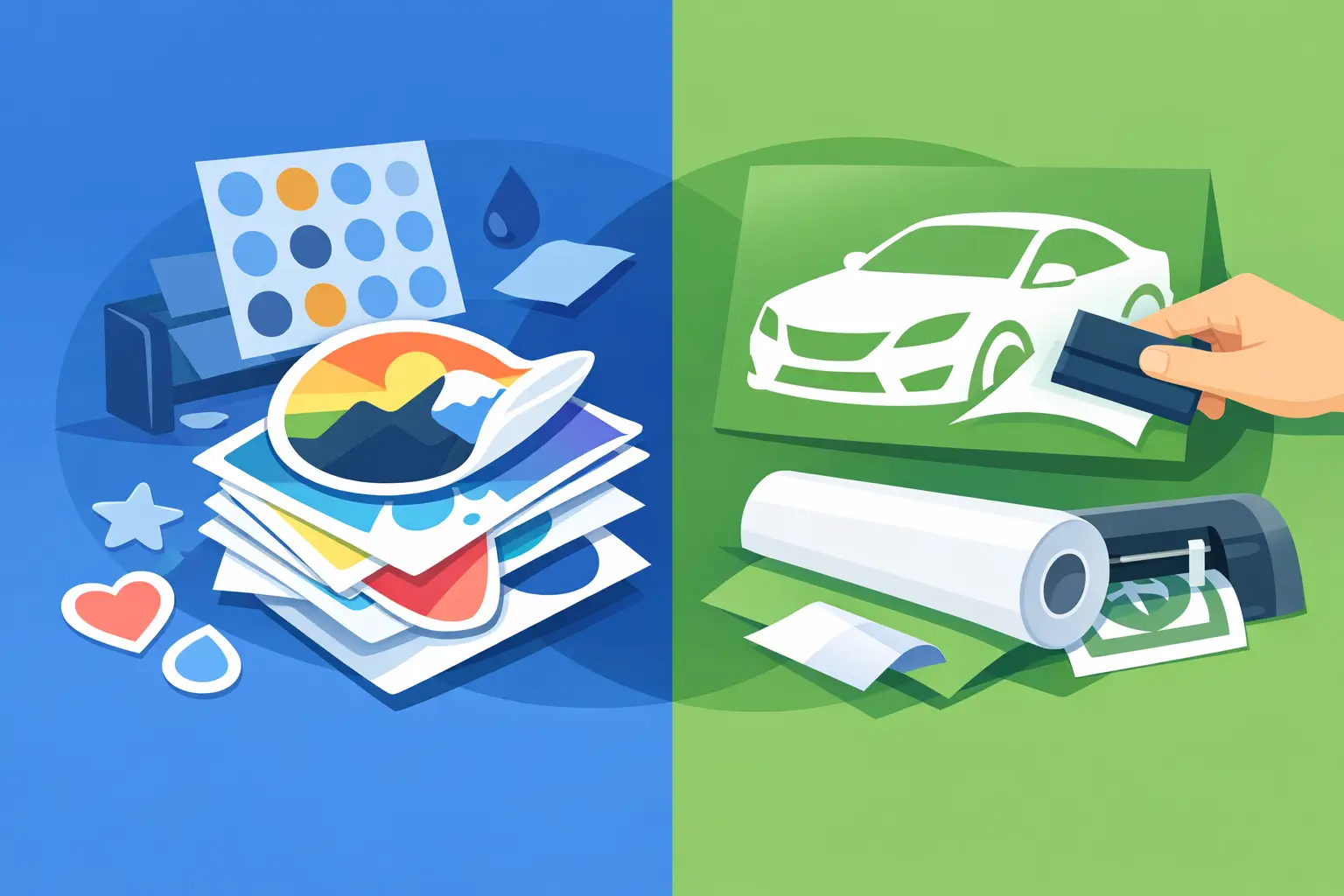
A printed sticker is made by printing a full-color design onto adhesive material, then cutting it to shape. It can reproduce detailed artwork, multiple colors, small text, gradients, shading, and photographic images. Think of a company logo with several colors, a sponsor graphic, a custom illustration, or a product label.
A vinyl decal is commonly made by cutting solid-colored vinyl into letters, numbers, or shapes. The excess vinyl is removed, leaving only the design itself. Once installed, there is no background material around the lettering or graphic. That clean, background-free appearance is why cut vinyl is a go-to choice for vehicle lettering, boat names, windshield banners, US DOT numbers, and racing numbers.
The terms can overlap in everyday conversation. A printed sticker may be printed on vinyl, and some printed decals are made for outdoor vehicle use. The useful distinction is not the name alone. It is whether your design is printed as an image on a material or cut from colored vinyl as individual graphic elements.
When Printed Stickers Make More Sense
Printed stickers earn their place when the design carries a lot of visual information. If your artwork needs colors that cannot be reproduced with separate vinyl layers, printing gives you more freedom without turning the graphic into a complicated assembly job.
A contractor may use printed stickers for a full-color logo featuring a mascot, tools, and a phone number. A motorsports team may need sponsor badges with precise brand colors. A shop may need product labels, promotional handouts, helmet graphics, or QR code stickers. These are all jobs where printing can communicate more in less space.
Printed stickers also work well when you need a custom contour cut around an irregular image. A flame graphic, illustrated fish, badge logo, or detailed character can be cut around its outer edge while keeping all the color and internal detail intact.
For outdoor use, material selection matters more than the word “sticker.” A quality outdoor-rated printed vinyl graphic with proper protective lamination can handle sun, moisture, and routine cleaning far better than a basic paper-style label. Still, an exposed printed surface can eventually show wear at edges or in high-abrasion areas, especially on equipment that sees mud, brush, fuel, saltwater spray, or frequent pressure washing.
When Vinyl Decals Are the Better Tool
Cut vinyl decals are built for bold, clean identification. They are especially effective when the design is lettering, numbers, simple logos, stripes, or one-color graphics. Because the color is in the vinyl itself rather than printed on the surface, the finished look is crisp and highly legible from a distance.
That matters on a work truck. Door lettering has to be readable while the vehicle is parked at a jobsite or moving through traffic. The same is true for boat registration numbers, RV names, trailer identification, race numbers, and compliance lettering. A simple vinyl layout can do its job quickly without visual clutter.
Vinyl decals are also a strong choice when you want the surface color to show around the design. White lettering on a black truck door, metallic numbers on a race car, or black registration numbers on a white boat hull all look integrated with the vehicle rather than placed on top of it.
Durability is another reason to choose cut vinyl for long-term outdoor applications. Quality sign vinyl is designed to stand up to UV exposure, rain, road grime, and normal vehicle washing. Lifespan still depends on the vinyl grade, installation surface, climate, and care, but cut lettering is a proven workhorse for permanent or semi-permanent graphics.
Compare the Design Before You Compare the Material
The fastest way to choose is to look honestly at the artwork. If it can be described as letters, numbers, a silhouette, or a few solid-color shapes, cut vinyl is usually the cleaner option. If it includes detailed artwork, multiple shades, gradients, textures, photos, or exact logo colors, printing is usually necessary.
There are exceptions. A simple one-color logo can be printed, particularly if you want lots of small labels or an unusual shape. Likewise, a multi-color vinyl decal can be created with layered vinyl, but the complexity, thickness, registration, and cost can rise quickly. For a large fleet order with a simple two-color logo, layered vinyl may be worthwhile. For a small, highly detailed emblem, printed vinyl is often the smarter production choice.
Consider viewing distance, too. A detailed graphic can look sharp up close but disappear from the road. For truck doors, trailers, and race vehicles, bold lettering and strong contrast often outperform intricate designs. Put the detail where people will hold the item in their hands. Put the bold graphics where people need to read them at 30 feet.
Surface and Installation Change the Answer
Not every surface receives graphics the same way. Smooth, clean, non-porous surfaces such as painted metal, glass, gelcoat, and many plastics are ideal for both printed stickers and vinyl decals. Proper surface preparation is not optional: remove wax, grease, dust, and residue before installation.
Cut vinyl is especially popular on windows, vehicle doors, boat hulls, and painted panels because transfer tape keeps individual letters and shapes aligned during application. This makes it possible to install a complete name, number set, or business layout as one graphic instead of placing every character by hand.
Printed stickers are often easier for smaller, self-contained designs. Peel the backing, position the graphic, and apply pressure from the center outward. They are practical for toolboxes, hard hats, equipment cases, product packaging, and small promotional graphics.
Curves, rivets, textured plastic, and flexible surfaces require extra attention. A large printed sticker may bridge over deep contours if it is not designed for the surface. Fine cut vinyl lettering may struggle on rough texture or low-surface-energy plastics. If the job is going on an ATV fender, a cooler, a powder-coated tool box, or a corrugated trailer, match the adhesive and film type to the application instead of ordering based on appearance alone.
Cost, Quantity, and Replacement Planning
Cost is not just the price of one graphic. Think about quantity, installation time, expected replacement, and how often the design changes. Printed stickers can be efficient for batches of small, full-color labels. They are also useful for seasonal promotions, event graphics, limited-run products, and sponsor packages that may change next season.
Vinyl decals can be a better value for straightforward lettering that needs to last. A set of properly sized truck door letters, boat registration numbers, or trailer identification graphics delivers a professional finish without paying for full-color printing you do not need.
For commercial vehicles, build replacement into the plan. A door logo may need to be reproduced after bodywork, while a fleet may add or retire units throughout the year. Keeping a consistent design file, dimensions, colors, and placement notes makes reorders far easier. For regulated lettering, confirm the required text, height, and placement before production so the graphic is useful the moment it is installed.
Make the Graphic Work as Hard as the Vehicle
Choose printed stickers when the artwork needs full-color detail, complex branding, or a compact label format. Choose vinyl decals when you need clean lettering, bold numbers, durable identification, or a background-free graphic that looks built into the surface.
The best graphic is not always the most elaborate one. It is the one that fits the surface, stays readable, and holds up to the work, weather, and miles ahead. Start with the job your vehicle, boat, gear, or business needs the graphic to perform, then build the design around that requirement.