
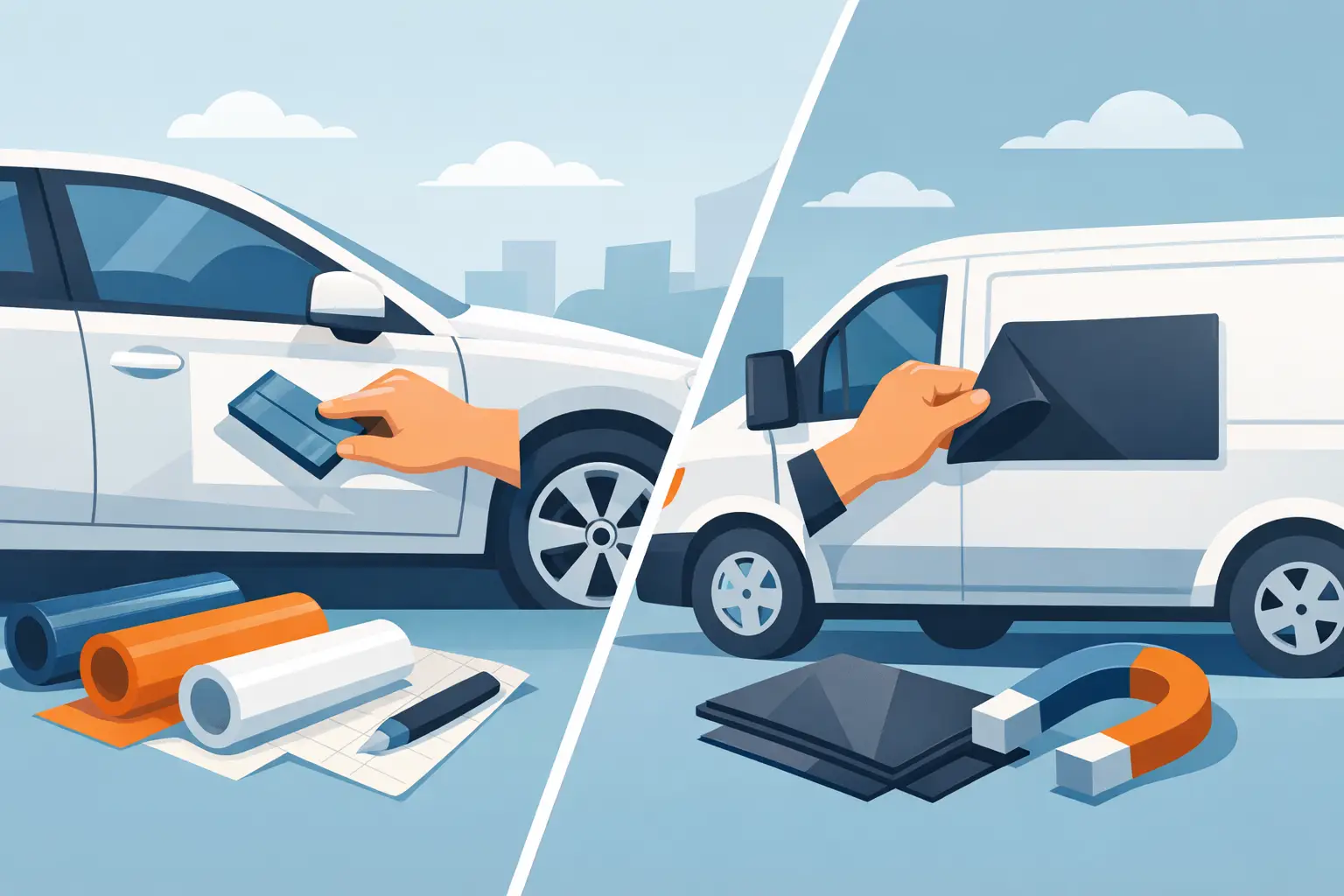
A contractor’s truck needs to look professional at every stop. A race car may need a new number before the next event. A sales rep may drive a personal vehicle during the week and want it clean on the weekend. Those are very different jobs, which is why vinyl lettering versus magnetic signs is not a one-size-fits-all decision.
Both products put your name, number, message, or contact information on a vehicle without the cost of a full wrap. The best choice comes down to permanence, surface type, how often the message changes, and the look you want rolling down the road.
Vinyl Lettering Versus Magnetic Signs: The Main Difference
Custom vinyl lettering is a pressure-sensitive graphic that adheres directly to a clean, prepared surface. It is cut to your selected font, color, size, and layout, then applied to a vehicle, boat, trailer, storefront, or other smooth surface. Once installed, it becomes part of the vehicle’s appearance and is built for everyday outdoor exposure.
Magnetic signs are removable panels with a printed or cut message on a magnetic backing. They attach to flat steel body panels, usually vehicle doors, and can be removed when you do not want advertising visible.
That difference changes nearly everything. Vinyl is the stronger choice when your graphic needs to stay put, look integrated, and handle regular use. Magnets are built around flexibility. You can apply them for work, remove them for personal use, or move them between qualifying vehicles.
When Vinyl Lettering Is the Better Choice
Vinyl lettering is the workhorse option for commercial vehicles, permanent identification, and custom vehicle style. It gives trucks, vans, trailers, boats, and race vehicles a cleaner finished look because there is no visible panel edge around the message. Properly designed lettering can be as simple as a business name and phone number or as detailed as multi-line door graphics, USDOT information, racing numbers, and color-matched logos.
For a business that uses the same vehicle every day, direct-applied lettering is usually the more professional investment. It will not slide out of position in a car wash, lift at the edge from poor contact, or need to be removed before highway travel. It also lets you use more of the vehicle’s available space. Door lettering, rear-window graphics, windshield banners, tailgate decals, and trailer graphics can work together as one consistent visual system.
Vinyl is also the clear choice for surfaces magnets cannot use. Aluminum truck bodies, fiberglass boats, plastic panels, windows, painted trailers, motorcycles, ATVs, and RVs are not magnetic surfaces. A magnet may look like an easy answer until you discover that the door is aluminum or the panel is curved too aggressively for full contact.
Durability matters too. Quality outdoor vinyl is designed for exposure to sun, rain, road spray, and routine washing. Actual life depends on the vinyl selected, climate, surface preparation, and care, but lettering is meant to be a long-term marking solution. For contractors, delivery businesses, fleets, and owner-operators, that reliability can outweigh the ability to remove a sign in seconds.
Best uses for direct-applied vinyl
Vinyl lettering makes sense for permanent business identification, DOT and compliance lettering, boat registration numbers, race numbers, trailer branding, windshield banners, and personalization that should look intentional rather than temporary. It is also a smart choice when you need tight spacing, custom fonts, layered colors, or a precise layout that follows body lines.
Application does require care. The surface should be clean, dry, and free of wax or oily residue. Taking time to measure, level, and apply the graphic correctly pays off every time you walk back to your vehicle. If you are lettering multiple fleet units or applying larger graphics, professional installation can be the right move.
When Magnetic Signs Make More Sense
Magnetic vehicle signs earn their place when a message is temporary or a vehicle serves more than one role. A real estate agent using a personal SUV, a part-time service provider, a seasonal business, or a company with rotating drivers may prefer the ability to put branding on and take it off as needed.
They are especially useful when you have a short-term promotion, event schedule, changing phone number, or several employees sharing a vehicle. Instead of committing to permanent lettering, you can store the magnets flat and use them only during work hours, at job sites, or while attending an event.
Magnetic signs can also be economical for simple, short-term identification. If you are testing a new business name or service area, removable signs give you room to adjust before ordering permanent graphics. That flexibility is valuable, but only when the vehicle and usage conditions are right.
A magnetic sign needs a clean, flat ferrous-metal panel for reliable contact. It will not hold on aluminum, fiberglass, plastic, or body areas with substantial curves. Many newer vehicles have mixed-material panels, so check the exact placement area with a small magnet before ordering. Do not assume every truck or van door is steel.
Magnet care is not optional
Magnetic signs need more maintenance than vinyl lettering. Dirt, moisture, and grit can collect behind the panel, which can mark or dull paint if left in place. Remove the sign regularly, clean both the magnet and vehicle surface, and let everything dry before reapplying it. Store magnets flat, not rolled or folded, so they keep their shape and full contact.
Use common sense in harsh conditions. High speeds, strong winds, heavy rain, damaged edges, and poor placement can all reduce holding performance. A magnetic sign should sit completely flat against a clean steel panel, with no trapped air or overlap on a body crease. If a panel does not provide full contact, choose another location or switch to vinyl.
Compare Appearance, Cost, and Long-Term Value
At first glance, magnets can seem like the lower-commitment option because they are removable. That is true. But the better value depends on how long you will use them and how often you need branding visible.
Vinyl lettering typically has a more polished, built-in appearance. It can be scaled precisely to the door, bed side, rear glass, or trailer panel. You can choose fonts, colors, outlines, shadows, and layouts that match your existing logo or vehicle style. For commercial work, that consistency helps customers recognize you before you even step out of the truck.
Magnetic signs have a more temporary presentation because the panel perimeter remains visible. That does not make them unprofessional. A well-designed magnetic door sign can look sharp and clear from the road. But if you are building a recognizable fleet image or want an upscale, permanent finish, vinyl generally wins.
Cost should be viewed over the full life of the graphic. A removable magnet can be reused on compatible vehicles, but it needs attention and may not survive every handling mistake. Vinyl requires a more deliberate application, yet it delivers visibility every time the vehicle is on the road. For a daily work truck, that ongoing exposure often provides more value than a sign that spends most of its time in the garage.
Choose Based on How Your Vehicle Actually Works
Start with the vehicle itself. If the application surface is not flat steel, magnetic signs are off the table. If it is a boat, RV, trailer, aluminum-body vehicle, window, or painted panel where a graphic needs to follow a specific area, custom vinyl lettering is the practical route.
Next, think about your schedule. Do you need your business name visible every day, including weekends and after-hours stops? Choose vinyl. Do you need to remove branding after a shift because the vehicle is shared with family or used for personal errands? Magnetic signs may fit better.
Finally, decide how permanent the message is. A business name, phone number, license number, registration number, or racing identity that will remain the same for seasons belongs in vinyl. A temporary campaign, rotating service message, or new side business still finding its footing may be better served by magnets.
There is also a hybrid approach. Many operators use permanent vinyl for core identification, such as a company name and phone number, then add removable magnetic panels for seasonal offers, special services, or event-specific information. That gives the vehicle a consistent brand while leaving room for change.
Build the Sign Around the Job
Do not choose solely because one option seems easier to install. A sign that suits the vehicle, message, and workday will save you time and present your business better over the long run. eDecals.com makes it easy to create custom lettering with the size, color, font, and layout your vehicle needs, whether you are marking one pickup or preparing graphics for a growing fleet.
If your name needs to stay visible through job sites, traffic, weather, and wash days, make it part of the vehicle with vinyl lettering. If your message needs to come off when the workday ends, use a properly fitted magnetic sign and maintain it carefully. Choose the option that works as hard as the vehicle carrying it.