
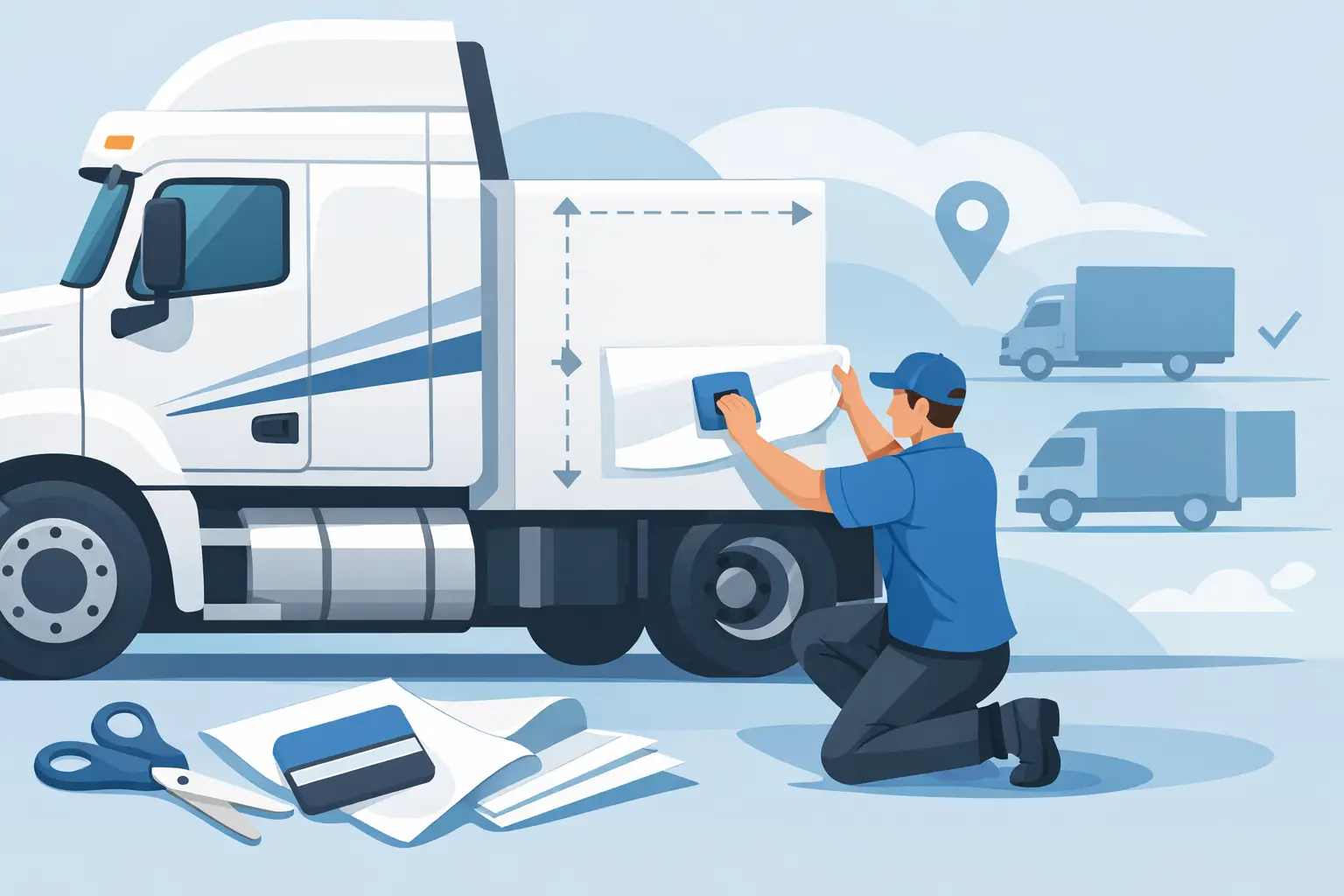
A truck door is not the place for guesswork. If your lettering is too small, hard to read, or laid out poorly, it can create headaches you do not need. Custom usdot number decals give you a cleaner, faster way to put required information on your vehicle while keeping the finished look professional.
For owner-operators, contractors, and fleet managers, the goal is simple – get compliant lettering that looks sharp, lasts outdoors, and fits your truck correctly the first time. That sounds straightforward, but a lot depends on spacing, visibility, surface size, color contrast, and the exact information you need to display.
Why custom USDOT number decals matter
Basic pre-made lettering can work in some situations, but it often creates compromises. You may end up settling for the wrong font size, a layout that wastes door space, or a color that disappears against the paint. On a white truck, black lettering usually reads well. On darker paint, that same choice can be a mistake.
Custom USDOT number decals give you control over the details that actually affect usability. You can match the decal size to your available space, choose a readable font, and build a layout that includes your company name, city, state, MC number, or GVW information when needed. That matters whether you run one pickup with a trailer or a full commercial fleet.
There is also the appearance factor. Compliance lettering does not need to look like an afterthought. Clean, properly sized vinyl lettering helps a work truck look organized and established, which matters when customers, inspectors, and jobsite managers see your vehicle every day.
What should be included on a truck decal
The exact information can vary depending on your operation, registration, and where you run. Many commercial vehicles need the legal or business name and USDOT number displayed on both sides of the power unit. Some operators also include their city and state. Others need additional identifiers such as an MC number or gross vehicle weight marking.
This is where customization helps. Instead of trying to force everything into a generic one-line strip, you can set up the lettering in a way that stays readable. A two-line layout may fit a door better. On some trucks, a wider format works best below the window. On others, a compact stacked layout makes more sense.
If you are unsure what must appear on your specific vehicle, verify your requirements before ordering. The decal itself should be the easy part. The expensive mistake is ordering the wrong information, then having to redo the job.
Choosing the right size and layout
The best decal size depends on your truck, the area where the lettering will be installed, and how much information you need to show. A small pickup door and a semi tractor door do not give you the same real estate. Neither does a service body truck with handles, trim, or body lines cutting through the panel.
Readability should lead the decision. Larger lettering is usually better, but only if the design still looks balanced and fits the panel cleanly. Cramming too much into one long line can make the numbers hard to read at a glance. Spacing matters almost as much as letter height.
A practical approach is to measure the exact usable area before you customize. Account for door handles, seams, curves, rivets, and molding. If the truck has a heavily contoured surface, that may affect the ideal placement. Flat, smooth panels are easier to letter and tend to give the cleanest result.
Custom USDOT number decals and color contrast
One of the most common mistakes is choosing a color based on preference instead of visibility. Chrome or metallic finishes may look good in a product image, but they are not always the smartest choice for required identification. If readability is the priority, high contrast wins.
Black on white, white on black, and other strong contrast combinations generally perform best. Red can work well on light-colored vehicles, but not every shade stands out equally. Dark blue on black paint might look subtle, but subtle is not what you want for truck identification.
Font choice matters too. Decorative scripts and novelty styles belong on some custom graphics, but not usually on compliance lettering. Clear block fonts are easier to read from a distance and hold up better in practical use. This is one case where simple usually beats flashy.
Material and durability are not minor details
Truck lettering lives a rough life. Sun, rain, road grime, fuel stops, pressure washing, and long hours outdoors all take a toll. That is why vinyl quality matters. A decal that looks fine when it arrives but shrinks, cracks, or peels early is not a bargain.
For commercial use, you want outdoor-grade vinyl built for vehicle application. Good material keeps its color, holds its edges, and stays in place on properly prepared surfaces. Durability also depends on correct installation. Even strong adhesive can struggle if the door was dirty, waxed, or applied in poor conditions.
There is a trade-off here. Low-cost lettering may save money upfront, especially if you only need a quick fix, but replacement costs and downtime can erase that advantage fast. For fleets and working trucks, long-term performance usually matters more than shaving a few dollars off the initial order.
Installation: simple if you prep correctly
Applying custom usdot number decals is not complicated, but rushing it can ruin the result. The surface should be clean, dry, and free of wax, grease, and dust. If the truck has fresh paint, make sure it has fully cured before applying vinyl.
Take time to position the decal evenly on both sides of the vehicle. Crooked lettering stands out immediately, and on a commercial truck it gives the wrong impression. Use a measuring tape instead of eyeballing the placement. The extra few minutes are worth it.
Temperature also matters. Vinyl tends to apply best within a reasonable temperature range, not on freezing metal or a sunbaked panel that is too hot to touch. If you install carefully, smooth out air as you go, and follow application instructions, the finished result should look clean and professional.
Who benefits most from custom lettering
Owner-operators often need a fast, professional solution that does not require going back and forth with a local sign shop. Contractors and small businesses want truck identification that handles daily jobsite use. Fleet managers need consistency across multiple units, which means matching size, font, and layout from vehicle to vehicle.
That is why online customization has become such a practical option. You can build what you need based on the actual truck and actual information, instead of trying to make a stock product work. For buyers who want control over font, color, size, and layout without slowing down the order process, that is a better fit.
At eDecals.com, that kind of customization is built around real vehicle use, not generic sticker templates. The difference shows up in how the lettering fits the panel, reads at a glance, and holds up on the road.
Getting it right the first time
Before you place an order, check four things: your required text, your usable install area, your preferred color contrast, and your layout. Those decisions have more impact than most buyers expect. A decal can be perfectly made and still be wrong for the truck if the sizing or design choices were off.
If you are lettering a single truck, precision saves you from reordering. If you are managing multiple vehicles, consistency saves time and keeps your fleet looking organized. Either way, custom work pays off when the decal fits the application instead of forcing the application to fit the decal.
Good truck lettering should do its job without causing extra work. When your custom usdot number decals are easy to read, properly sized, and built for the road, you can install them once and get back to running your vehicle the way you need to.