
A truck door gives you a small space to do a big job. It might need to identify your business, display DOT information, show a truck number, or simply make the vehicle look more dialed-in. If you’re figuring out how to make truck door lettering, the difference between a sharp result and a sloppy one usually comes down to a few practical decisions: what the lettering needs to say, how it needs to read at a glance, and what material will hold up on the road.
Truck door lettering is not complicated, but it does reward getting the details right the first time. A contractor’s work truck, a fleet pickup, and a customized show truck all need different choices in layout, font, color, and finish. The best lettering is easy to read, sized for the panel, and made from vinyl that can handle sun, rain, washing, and daily use.
What truck door lettering needs to do
Before you pick a font or color, decide the job your lettering needs to do. For some buyers, the truck door is a branding space. For others, it is about compliance, identification, or clean personalization. That matters because the design approach changes fast depending on the goal.
If the truck is for business use, the lettering usually needs to be readable from a short distance and organized around the company name first. Secondary information like phone numbers, city, or license details should support the main message, not compete with it. If the truck is personal or recreational, you have more freedom to push the styling, use bolder type, or add effects.
This is where many designs go sideways. People try to fit too much into a limited door panel. The result is crowded lettering that looks busy from five feet away and unreadable from twenty. A cleaner design almost always works better.
How to make truck door lettering that fits the door
The truck door itself sets the rules. A full-size pickup door gives you more room than a compact truck, but even large doors have handles, body lines, trim, badges, and curved panel areas that affect placement. The flat space you can actually use is often smaller than it looks.
Start by measuring the usable area, not the whole door. Measure width and height between the handle, wheel arch line, lower molding, and any trim pieces. If the truck has a pronounced body contour, keep the lettering inside the flattest section. Vinyl can flex over slight curves, but your text will always look cleaner on a smooth, open panel.
For most truck door applications, wider layouts read better than tall stacked ones. A business name spread across the center of the door usually looks more balanced than cramming multiple lines into a block. If you need several lines, give each one room. Tight line spacing is one of the fastest ways to make a professional truck look homemade.
Pick the right lettering style
Font choice is not just about looks. It controls legibility, tone, and how much information you can fit into the space. Bold sans serif fonts are often the safest choice for truck doors because they read quickly and cut cleanly in vinyl. Script fonts can work for brand names or custom builds, but they are usually better as accents than as the main information line.
If the truck is used for business, clarity should win over personality most of the time. A simple, heavy font in uppercase or title case is easier to read on the street than something decorative with thin strokes or exaggerated edges. If you’re using a condensed font to fit more characters, watch the spacing. Letters that are too tight start to blur together from a distance.
Effects can help, but only when they solve a visibility problem. An outline, shadow, or two-color treatment can make lettering stand out against the paint color, especially on dark trucks or metallic finishes. Still, every added effect adds visual weight. If the text is already small, too many effects can make it harder to read instead of easier.
Color and contrast matter more than people think
The best-looking truck door lettering is usually built on contrast. White, black, silver, and bright colors are popular because they stand off most paint colors clearly. The question is not just what color looks good, but what color remains readable in sun, shade, rain, and road grime.
A white decal on a dark truck is a safe move. Black on white or silver paint also works well. Red can look strong, but it loses some punch on dark maroon or black paint. Metallics and specialty films can look great for custom builds, but for work trucks they are not always the best call if readability is the priority.
This is also where finish matters. Gloss vinyl tends to look crisp and vibrant, while matte can produce a more understated custom look. Reflective lettering may make sense for some fleet or safety applications, but it depends on the vehicle’s use and whether visibility at night is part of the requirement.
Choose vinyl made for real truck use
If you’re making truck door lettering, the material is not the place to cut corners. Outdoor-rated vinyl built for vehicle graphics will hold color, adhesion, and shape far better than bargain material meant for temporary use. Trucks deal with heat, cold, pressure washing, road salt, and constant exposure, so the vinyl needs to match that environment.
Cast vinyl is generally the better choice for long-term vehicle use, especially on surfaces with slight curves or where you want a more premium finish and better durability. Calendered vinyl can still work for flatter panels and shorter-term applications, but it is usually not the first choice when longevity is the priority.
Adhesive quality matters just as much as the face film. A clean-cut lettering job with weak adhesive will start lifting at the edges, especially around smaller letters and sharp corners. If the lettering includes fine detail, thin strokes, or smaller text, high-quality material becomes even more important.
Designing for legal and business needs
Some truck door lettering is purely visual. Some of it has to meet legal or operational requirements. If the truck needs USDOT numbers, company identification, or unit numbers, verify the size, placement, and readability requirements before you finalize the design. Rules can vary depending on vehicle type and use.
Even when compliance is involved, the layout can still look clean. Put the most important information where it reads naturally, and keep support text aligned and evenly spaced. A truck can look professional and meet requirements at the same time. That usually comes down to disciplined sizing and not trying to turn mandatory lettering into a full ad.
For small business owners, a simple layout often performs best: company name first, then service or trade, then contact details if needed. If your truck is seen in motion more than parked, fewer words usually do more work.
Installation can make or break the result
A great design still fails if it goes on crooked, bubbles badly, or lands over dirt and wax. The truck door needs to be washed, dried, and cleaned with the right prep method before installation. Any residue left on the paint can reduce adhesion.
Temperature matters too. Installing vinyl in very cold or very hot conditions can make application harder and affect how the adhesive sets. A controlled environment is always better when possible. Take time to position the lettering with a guide before removing backing paper. Rushing this step is how you end up with text that slopes uphill across the door.
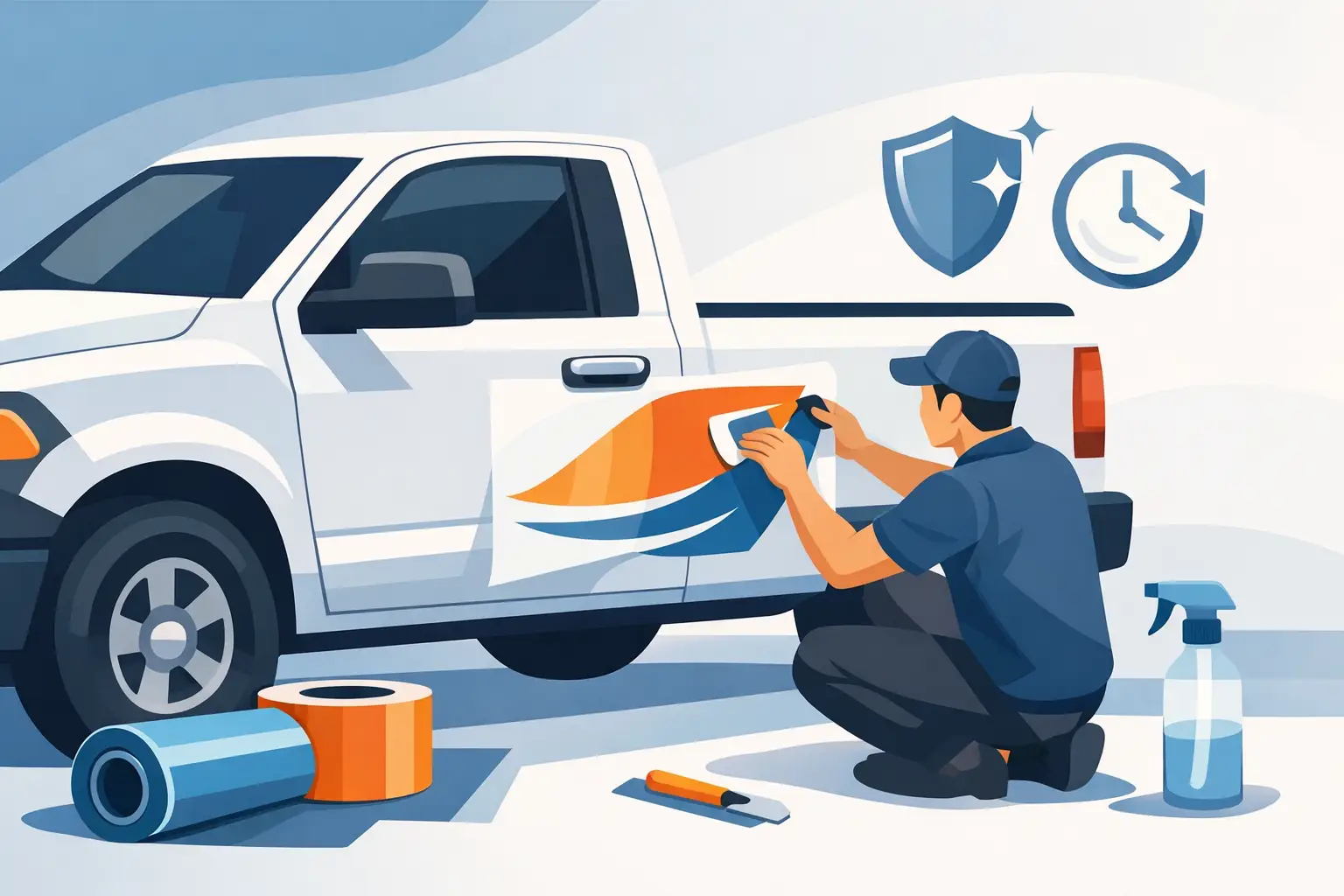
Most truck door lettering installs cleanly with transfer tape and a careful squeegee pass. Work from the center outward to reduce bubbles, and pay extra attention to smaller letters and edges. If the door has contours, apply pressure evenly so the vinyl seats properly without stretching more than necessary.
Should you make it yourself or order it ready to install?
That depends on what you mean by “make.” If you have design experience, access to proper vinyl, and a cutter, you can produce your own lettering. But most truck owners and business buyers are better off creating the layout through a professional online lettering tool and ordering it ready to apply.
That route gives you more control than people expect. You can usually choose fonts, colors, sizing, effects, and layout instantly without having to build the file from scratch. It also reduces the common DIY problems: bad scaling, poor spacing, low-grade materials, and time lost redoing the job. For buyers who want fast results without guessing, using a purpose-built custom lettering platform is the smarter move.
At eDecals.com, that process is built around exactly this kind of project – practical truck lettering that you can customize quickly and order with confidence.
How to make truck door lettering look professional
The cleanest truck lettering jobs all share the same habits. They use strong contrast, sensible sizing, and enough open space around the text. They match the tone of the truck, whether that’s a work-focused fleet unit or a custom personal build. Most of all, they avoid trying to do too much in one panel.
If you’re on the fence between two layouts, the simpler one is usually the better one. If you’re choosing between a trendy font and a readable font, choose the readable one. And if the truck works hard every day, buy lettering material that works just as hard.
A truck door is not a huge canvas, but it is prime real estate. Treat it like a visible piece of equipment, build the lettering with purpose, and you’ll end up with something that looks right the first time and keeps looking right down the road.