
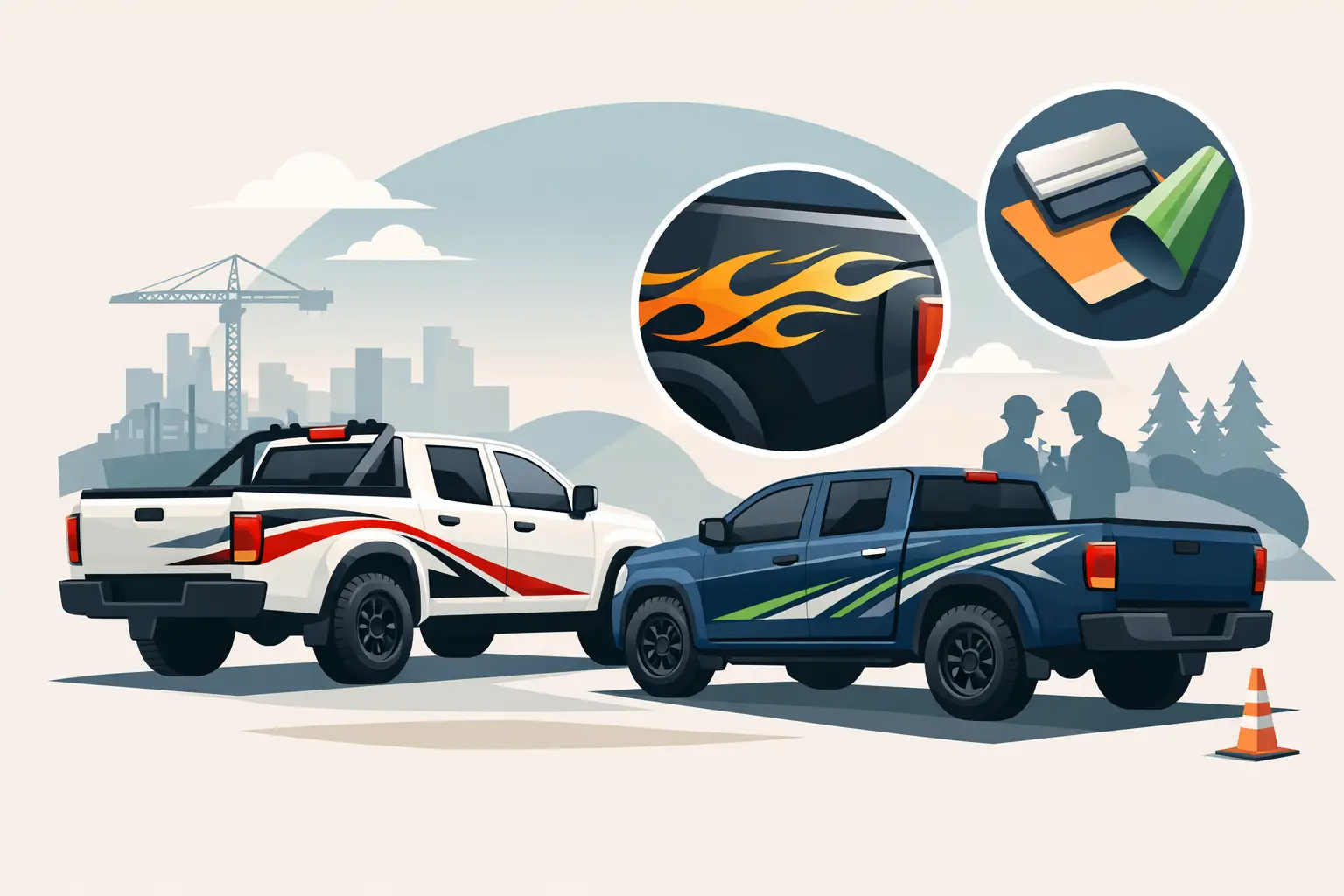
A truck decal has to earn its spot. On a work truck, it needs to identify your business clearly at a stoplight and keep looking sharp through rain, road grit, and jobsite dust. On a personal build, it has to fit the truck’s lines, paint color, and personality without looking like an afterthought. The best custom truck decals are not defined by one style. They are the decals built for the job, the surface, and the way your truck is used.
Whether you need contractor door lettering, a windshield banner, race numbers, a tailgate graphic, or a clean custom name decal, the right choices come down to material, layout, size, and application. Start with the purpose, then build a design that can be read, recognized, and trusted from the right distance.
What Makes the Best Custom Truck Decals?
The best decal for a lifted weekend truck is rarely the same as the best decal for a three-vehicle plumbing fleet. Both need outdoor-grade vinyl, but their priorities are different. A personal truck may call for bold colors, layered graphics, or a matte finish. A commercial truck needs high-contrast lettering, organized information, and a layout that remains legible while the vehicle is moving.
Durability is the baseline. Vehicle-grade vinyl should hold up against sun exposure, washing, temperature swings, and normal road use. Cheap paper-like stickers and indoor craft vinyl can look fine on day one, then fade, curl, or crack when exposed to real conditions. For truck graphics, choose vinyl made for exterior application and pair it with a surface that is properly cleaned before installation.
A good decal also respects the truck. Door lettering should sit within the usable flat area instead of running into handles, body lines, moldings, or trim. Tailgate decals need enough contrast to stand out against the paint. Windshield banners need a size and placement that do not create a visibility problem. The strongest designs look intentional because they are sized for the specific panel, not simply stretched to fill space.
Match the Decal Type to the Truck’s Job
Before choosing a font or color, decide what the decal needs to accomplish. This keeps a truck from becoming crowded with graphics that compete instead of work together.
Business lettering and truck door graphics
For contractors, service companies, delivery operators, and local businesses, truck door lettering is often the most valuable graphic on the vehicle. Your company name, service category, phone number, and website or service area should be easy to read in a few seconds. That means clean spacing and a strong color contrast matter more than decorative effects.
White lettering on a dark truck and black lettering on a light truck remain dependable choices. If your brand uses a brighter color, use it as an accent or outline when needed. Script fonts can add personality, but a highly stylized font is a poor choice for a phone number or licensing information. Use the decorative font for the business name and keep the supporting details straightforward.
If you operate commercially, remember that required markings may have specific rules. USDOT numbers, GVW lettering, unit numbers, and other compliance information should be accurate, visible, and separate enough from promotional graphics to avoid confusion. Function comes first here.
Personalized names, slogans, and lifestyle graphics
Personal decals give a truck its signature look. A last name across the rear window, a ranch logo on the door, an off-road slogan on the bedside, or a custom tailgate graphic can all work well when the design has room to breathe.
The trade-off is easy to miss: larger is not always better. Oversized graphics can overpower a clean build, especially when they cross sharp body contours or compete with aftermarket wheels, suspension, and lighting. A single well-placed graphic often has more impact than several small decals scattered across the cab and bed.
Choose a style that matches the truck. Block lettering suits work trucks, sport trucks, and race-inspired builds. Western, brush, or distressed styles can fit a ranch, hunting, or trail-focused truck. Clean modern lettering works well for business fleets and newer pickups. The design tool should give you control over fonts, colors, outlines, shadows, and layout so the final graphic feels built for your vehicle.
Racing numbers and performance decals
Race numbers need immediate readability. High contrast is essential, and the number should be large enough for officials, spectators, and track staff to identify the truck quickly. A dark number on a light background, or the reverse, is usually the safest route.
Performance sponsors, class markings, and small supporting graphics should follow a clear hierarchy. Put the number first, then add secondary decals where they will not interfere with it. Consider the rules for your sanctioning body before ordering, since number size, placement, and class identification can vary by event.
Windshield banners and rear-window decals
A windshield banner makes a strong first impression, but placement matters. Keep it high on the windshield, use readable lettering, and confirm that it does not interfere with your view or violate local regulations. A rear-window decal has more room for customization, though rear defroster lines, tinted glass, and sliding rear windows can affect placement.
For either location, measure the usable width rather than guessing from the truck model. Windshield and rear glass dimensions can change between cab configurations and model years.
Choose Colors and Finishes That Stay Visible
Color is not only an aesthetic choice. It determines whether your message works from the curb, the highway, or across a parking lot. Contrast should guide every truck decal design.
Light lettering on dark paint is easy to read. Dark lettering on white, silver, tan, or light gray paint offers the same advantage. Red, blue, and green can look excellent, but they may need a white or black outline to remain visible on certain paint colors. Metallic and specialty finishes create visual interest, yet they are not always the strongest choice for essential business information.
Gloss vinyl has a crisp, traditional sign look and often complements factory paint. Matte vinyl gives a lower-sheen, custom appearance that works especially well with modern builds and blackout packages. Reflective vinyl is a practical option for work trucks, trailers, and service vehicles that need added nighttime visibility. The right finish depends on whether the goal is style, visibility, or both.
Measure Before You Design
A few measurements prevent most ordering mistakes. Measure the height and width of the actual panel where the decal will go. On truck doors, account for handles, trim, badges, and body creases. On bedsides, check where the wheel opening begins. On tailgates, note cameras, emblems, and handle locations.
For lettering, think about viewing distance. A business name can be larger, while a phone number needs enough character height to be read from the road. Fine details may look great on a computer screen but disappear when printed small. If the message matters, simplify it.
It also helps to use painter’s tape to mark the proposed decal area on the truck. Step back 10 to 20 feet and look at it from different angles. This quick check reveals whether the size is balanced before production begins.
Installation Is Part of the Result
Even premium vinyl can fail early if it is installed over wax, dust, oil, or cold wet surfaces. Wash the application area thoroughly, dry it completely, and use a final wipe suitable for removing residue. Avoid applying decals in extreme cold, direct blazing sun, or high wind.
Take your time with alignment. Use a tape hinge to hold larger lettering and graphics in position, then work from the center outward with steady pressure. This reduces trapped air and keeps letters straight. Do not rush the transfer tape removal. Pull it back slowly at a sharp angle while watching for any edge that needs to be pressed down again.
After installation, give the adhesive time to set before aggressive washing. Hand washing is gentler than directing a pressure washer at decal edges. If you do use a pressure washer, keep the nozzle at a safe distance and avoid blasting straight into the vinyl edge.
Build Your Truck Decal Around a Real Use Case
The best custom truck decals make the truck more useful, more recognizable, or more personal. A contractor may need clean door lettering that generates calls. A fleet manager may need consistent unit IDs and compliance markings. A truck enthusiast may want a banner or bedside graphic that separates a well-built rig from every stock pickup in the lot.
Start with the truck’s purpose, measure the available space, and choose durable exterior vinyl in colors people can actually read. With eDecals.com, you can build the lettering or graphic around those exact specifications instead of settling for a generic sticker. Design it for the miles ahead, not just for the photo.