
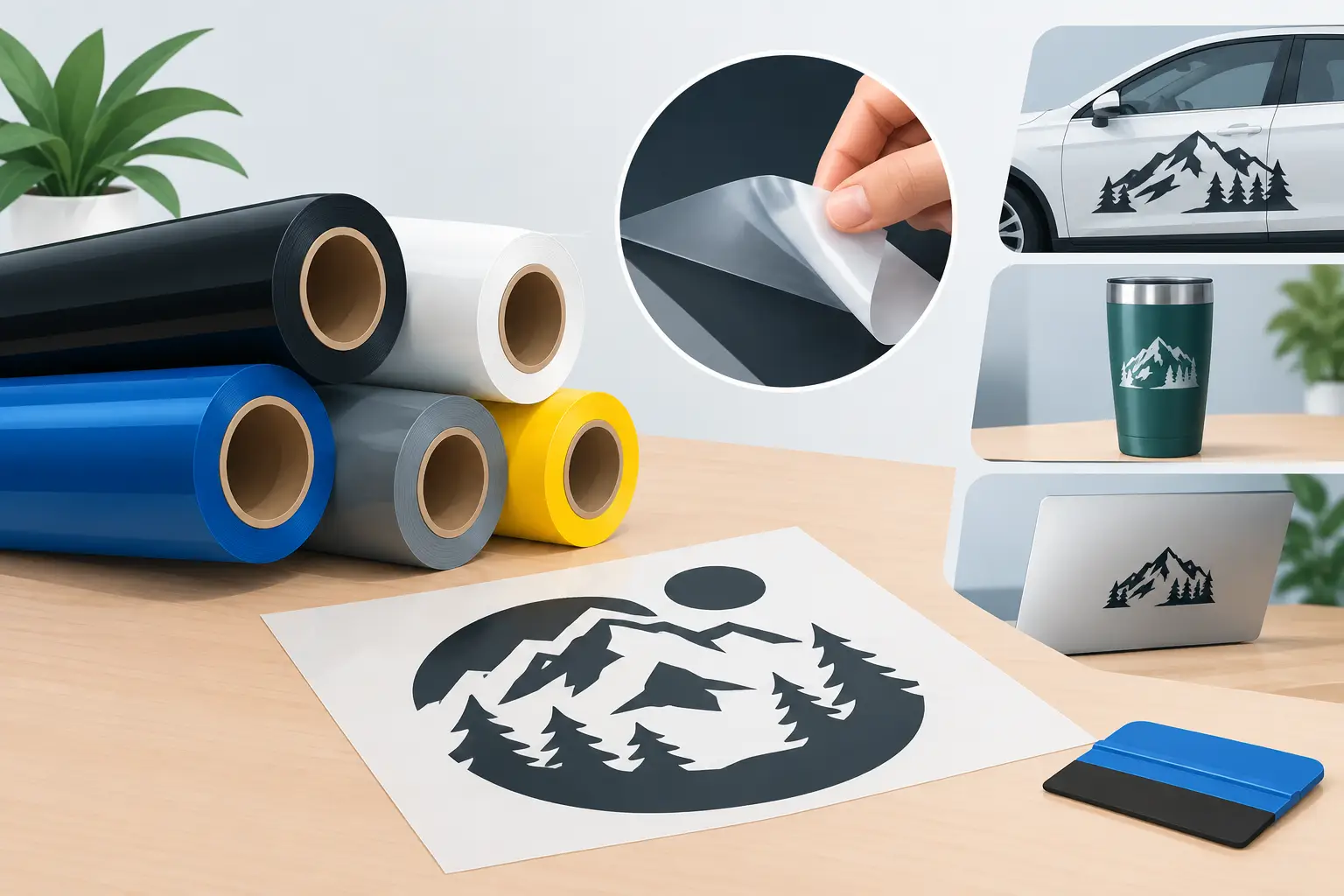
A truck door logo that starts lifting at the corners, boat registration numbers that crack after one season, or race graphics that shrink around a fender are not design problems. They are material-selection problems. This vinyl decal material review breaks down the films, adhesives, and finishes that determine whether your graphics look sharp for the long haul or become a redo job.
The right vinyl depends on where it is going, how long it needs to perform, and what it has to conform to. A flat trailer panel, a curved motorcycle tank, and a fleet truck that sees daily highway miles should not automatically receive the same material.
What a Vinyl Decal Material Review Should Cover
A decal is more than a colored piece of vinyl. Its real-world performance comes from the face film, the adhesive, and, for printed graphics, the ink and protective laminate. Each layer affects durability, flexibility, color life, removal, and the decal’s ability to stay put through rain, road grime, fuel splatter, sun, and repeated washing.
Start with the job, not the color chart. For short-term promotions, indoor signs, and flat surfaces, an economical film can make perfect sense. For vehicle lettering, marine applications, motorsports graphics, and commercial branding, buying a higher-grade film upfront usually prevents fading, edge lift, and replacement costs later.
Cast Vinyl: Built for Curves and Long-Term Outdoor Use
Cast vinyl is the premium choice when performance matters most. It is made by casting liquid vinyl into a thin, highly conformable film rather than rolling it out under pressure. That manufacturing process produces material that is typically thinner, more flexible, and more stable over time.
On a vehicle, cast vinyl handles compound curves, body lines, rivets, and contours better than standard films. It is a strong choice for truck lettering, hood graphics, windshield banners, boat names, registration numbers, and decals applied around curves or recessed areas. Cast material also resists shrinkage well, which matters when clean spacing and crisp edges are part of the look.
The trade-off is cost. Cast vinyl is not the lowest-price material, and it does not need to be used for every basic decal. A simple temporary window notice or a flat indoor label may not justify the upgrade. But when your decal will live outdoors for years, face UV exposure, or wrap around difficult shapes, cast vinyl is often the better value.
Calendared Vinyl: A Practical Choice for Flat Applications
Calendared vinyl is made by rolling and stretching heated material into a film. It is generally thicker and less conformable than cast vinyl, but it remains a dependable option for many everyday decal jobs.
For flat surfaces such as equipment panels, trailer sides, windows, sign boards, and short-term vehicle promotions, calendared vinyl can deliver strong visual impact at a more accessible price point. It is especially useful when you need multiple decals for a business, event, worksite, or seasonal campaign and the application surface is straightforward.
Not all calendared films are equal. Higher-quality polymeric calendared vinyl offers better outdoor life and dimensional stability than entry-level monomeric vinyl. Monomeric material is best reserved for short-term, flat-use applications. Polymeric film is the smarter middle ground for many outdoor decals on relatively flat surfaces.
Avoid forcing calendared vinyl into deep channels, sharp curves, or highly contoured body panels. It may look good on installation day, then pull back over time as the material tries to return to its original shape. That is where cast film earns its price.
Vinyl Decal Material Review: Adhesive Matters Too
A great face film can still fail with the wrong adhesive. Permanent adhesive is designed for long-term adhesion and is the standard choice for most outdoor vehicle lettering, boat graphics, and commercial decals. It creates a strong bond once it has had time to cure, especially on properly cleaned paint, glass, metal, and smooth plastic.
Removable adhesive is useful when the graphic has a defined end date. Think temporary promotions, short-term event decals, or graphics that need to come off cleanly from a suitable surface. Removable does not mean weak. It means the adhesive is engineered to release more cleanly within its intended service window.
Surface condition changes the equation. Fresh paint needs adequate cure time before any decal is installed. Textured plastics, low-surface-energy materials, oxidized paint, and heavily waxed surfaces may require specialty adhesive solutions or extra preparation. If you can feel a rough texture, expect adhesion to be more challenging than it would be on smooth painted metal or glass.
For most exterior vehicle graphics, clean the application area thoroughly with an appropriate surface cleaner, remove wax and silicone residue, and let the surface dry completely. Installing over dirt, tire shine overspray, or polish residue is an easy way to shorten decal life.
Printed Vinyl, Lamination, and Color Protection
Printed decals give you the freedom to use logos, gradients, photographs, camouflage patterns, sponsor graphics, and detailed artwork that cut vinyl alone cannot reproduce. But printed material needs protection when it will face serious outdoor use.
A clear laminate acts as a protective top layer over the printed image. It helps guard against UV exposure, moisture, scuffs, road debris, and frequent cleaning. For vehicle doors, trailers, powersports equipment, and marine graphics, lamination is often the difference between a graphic that stays presentable and one that fades or scratches prematurely.
Match the laminate finish to the design and use case. Gloss delivers rich color and a polished look. Matte reduces glare and gives graphics a flatter, more understated finish. Specialty finishes can add visual impact, but the best choice is the one that fits the vehicle, brand, and maintenance expectations.
For a cohesive look, the laminate should generally match the performance level of the printed vinyl beneath it. Premium printed film paired with a low-grade overlaminate is a weak link. The same applies in reverse: a high-end laminate cannot turn a short-term film into a long-term wrap material.
Specialty Vinyl for Visibility and Extra Impact
Reflective vinyl is a practical upgrade when visibility is part of the job. It is popular for work trucks, trailers, emergency-oriented markings, safety labels, and equipment that needs to be noticed in low-light conditions. Reflective material is not a replacement for required lighting or DOT-compliant conspicuity tape where those rules apply, but it can add useful visibility and a professional finish.
Metallic, carbon fiber, chrome, fluorescent, and color-shifting films are more about style than basic identification. They are ideal for accent stripes, racing numbers, custom automotive graphics, motorcycle decals, and show-focused builds. Keep in mind that some specialty finishes have different durability and conformability ratings than standard cast colors. A bold effect is only worthwhile if the material is suited to the surface.
Magnetic signs belong in a separate category. They are not adhesive vinyl, and they work best on clean, flat ferrous metal panels. They offer removable branding for service vehicles and personal trucks, but they should be taken off regularly for cleaning and should not be treated like permanent door lettering.
Choosing Material by Application
For long-term truck, car, RV, boat, or motorcycle lettering, start with a premium outdoor film, especially when the design crosses contours or will see heavy weather. For commercial fleet graphics, consider how often the vehicle is washed, where it is parked, and whether consistent color across multiple units matters. For racing, choose material that can handle heat, dirt, cleanup, and frequent graphic changes between seasons.
If your decal is mainly decorative and applied to a flat, protected surface, a quality calendared film may be all you need. If it is a printed logo or detailed design, add a laminate for outdoor protection. If it must be seen at night, explore reflective options. The goal is not to buy the most expensive film for every project. It is to match the film to the punishment it will take.
Get More Life From Any Vinyl Decal
Even professional-grade vinyl benefits from good care. Avoid pressure-washing directly at decal edges, especially with hot water or a close nozzle. Wash with mild soap, skip abrasive pads, and use care around fuel, solvents, and harsh degreasers.
After installation, give the adhesive time to build a full bond before exposing the decal to aggressive washing or extreme conditions. Heat and cold can affect application as well, so install in a clean environment within the material’s recommended temperature range whenever possible.
A custom decal should be chosen with the same attention you give the vehicle or equipment it represents. Build the design around the job, select material that can handle the miles and weather ahead, and your graphics will keep doing their work long after the initial install.