
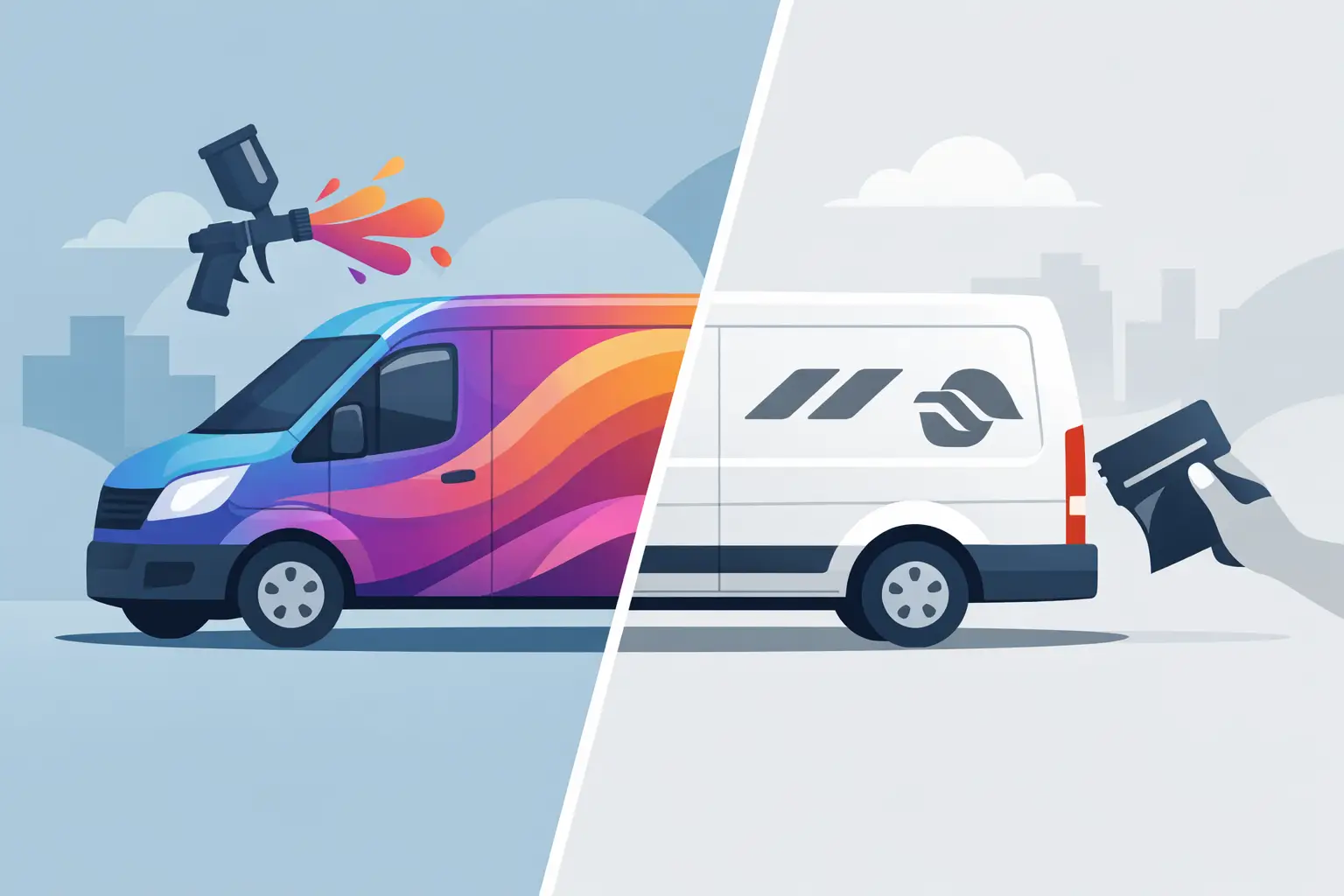
A pickup door with clean company lettering sends one message. A full-color wrapped van rolling through town sends another. When customers compare vehicle wrap versus cut lettering, they are usually not choosing between good and bad – they are choosing between two very different tools for visibility, budget, and how much of the vehicle they want to turn into advertising.
If you run a business, letter a work truck, manage a fleet, or want your personal vehicle to stand out, the right option depends on coverage, design goals, and how the vehicle is actually used. Some jobs call for simple, durable identification. Others need maximum visual impact from every angle. Knowing the difference before you order saves money and gets better results.
Vehicle wrap versus cut lettering: the real difference
Cut lettering is made from solid-color vinyl that is precision cut into letters, numbers, or simple graphic shapes. Think contractor door lettering, boat registration numbers, race numbers, USDOT lettering, or a company name and phone number on a truck. The material is applied directly to the vehicle surface, and the excess vinyl is removed so only the design remains.
A vehicle wrap uses printed vinyl panels to cover part of the vehicle or nearly all of it. Wraps can include gradients, photos, shadows, multi-color logos, product images, and large-format branding that would be difficult or impossible to achieve with standard cut vinyl alone. A wrap can be partial or full, depending on how much area you want covered.
That distinction matters because coverage changes everything – design flexibility, installation time, price, and the final look.
When cut lettering is the better buy
For a lot of commercial vehicles, cut lettering is the smartest choice. If your main goal is to display your business name, phone number, website, license numbers, or service list, lettering handles that job without adding cost for coverage you do not need.
A plumber with two service vans may not need full printed graphics across every panel. Clean door lettering and a rear phone number can do the job. The same goes for electricians, landscapers, pressure washing companies, mobile detailers, and local delivery businesses that want a professional look without turning the whole vehicle into a billboard.
Cut lettering also works well when you want a crisp, traditional sign look. Solid vinyl colors stay bold, and properly made lettering has a clean edge that reads well from a distance. For straightforward branding, that simplicity is often a strength.
There is another practical advantage. If your branding changes, a phone number needs updating, or a vehicle gets reassigned, replacing lettering is usually easier and less expensive than replacing a large printed wrap section.
Best uses for cut lettering
Cut lettering makes the most sense when the message is simple and specific. Commercial door lettering, fleet ID numbers, compliance markings, boat names, race numbers, windshield banners, and personalized truck or car graphics all fit naturally in this category.
It is also a strong option for buyers who already know what they want. If you have your text, want a certain font, need a specific size, and just need durable vinyl made right, cut lettering is efficient and direct.
When a vehicle wrap makes more sense
A wrap is built for visual reach. If you want people to notice the vehicle before they read it, a wrap has the advantage. Full-color graphics let you show branding elements that cut lettering cannot, including photo imagery, color transitions, printed textures, and large integrated layouts that flow across doors, quarter panels, hoods, and rear sections.
That is why wraps are popular for food service vehicles, franchise fleets, branded vans, promotional vehicles, and companies competing in crowded local markets. If ten service vans are driving the same roads, the one with a strong full-color layout usually gets more attention.
Wraps can also solve design problems on modern vehicles with sculpted body lines and tinted windows. A printed design can be built around those shapes more intentionally than a few standalone lettering elements. Instead of placing text wherever it fits, the whole vehicle becomes the canvas.
Best uses for wraps
Wraps work well when branding is image-heavy or style-heavy. If your logo uses multiple colors, if your design includes photos or detailed illustrations, or if you want a dramatic custom look for a car, truck, trailer, or motorsports application, a wrap gives you more room to build something bold.
They also make sense when brand consistency matters across a larger fleet. A full or partial wrap can standardize the look of multiple vehicles in a way that is harder to achieve with separate lettering pieces, especially when the design needs complex printed elements.
Cost is not just about the sticker price
The biggest reason buyers compare vehicle wrap versus cut lettering is cost. In most cases, cut lettering is the lower-cost option because there is less material, less print production, and often less labor involved. If you only need the business name, contact details, and a logo in spot colors, lettering usually gives you the strongest return per dollar.
Wraps cost more because they do more. You are paying for larger material coverage, print work, lamination, layout complexity, and installation on more surface area. That higher price can be worth it if the vehicle itself is a major advertising asset. A wrap may generate more impressions, but only if your business benefits from that extra visibility.
The smarter question is not Which is cheaper? It is What are you trying to achieve? If your vehicle needs identification, lettering is often enough. If your vehicle needs to sell the brand at every stoplight, a wrap may be the right spend.
Durability and maintenance
Both options can hold up well when made with quality vinyl and used for the right application. But they do age differently.
Cut lettering generally has fewer edges and less total material on the vehicle, so there is simply less graphic surface to maintain. For straightforward text and numbers, that can be a practical long-term advantage. It is also easier to replace one section if damage occurs.
Wraps cover more area, so they are more exposed to sun, washing, fuel spills, abrasion, and the day-to-day wear that comes with commercial use. A quality wrap can still perform very well, but more coverage means more opportunity for wear. On heavily used trucks and vans, usage conditions matter.
If your vehicles work hard – job sites, gravel lots, salt, frequent loading, pressure washing – that environment should factor into the decision. Sometimes less coverage is simply more practical.
Design flexibility and brand style
This is where the gap gets wider.
Cut lettering gives you control over font, color, size, spacing, and layout. It is ideal for direct communication. You can make the business name read clearly, choose colors that match your brand, and place the message exactly where it needs to go. For many buyers, that is all they need.
Wraps offer almost unlimited visual freedom. You can blend colors, print large logos, add textures, create dimensional effects, and produce a polished branded appearance that feels more custom and more aggressive. If your look is part of your competitive edge, wraps open more doors.
That said, more design freedom is not always better. Too much information or too many visual effects can hurt readability. Some of the most effective work trucks on the road still use clean cut lettering because customers can absorb the message in a second.
Installation and downtime
Vehicle graphics only help when the vehicle is back in service. That makes installation time a real business consideration.
Cut lettering is usually faster to produce and install, especially for basic door graphics, phone numbers, and compliance markings. If you need to get a truck lettered and moving again quickly, simple vinyl lettering often wins.
Wraps usually require more prep, more alignment, and more installation labor. Curves, recesses, rivets, and large panels all add time. For a single personal vehicle or a planned fleet branding project, that may be no issue. For work vehicles that earn money every day, downtime can matter as much as material cost.
Which option is right for your vehicle?
If you want a clean, professional, cost-conscious way to identify your business or personalize a vehicle, cut lettering is often the right call. It is especially strong for work trucks, door lettering, numbers, compliance decals, boat lettering, and straightforward branding.
If you want high-impact visuals, full-color branding, or a custom appearance that covers major portions of the vehicle, a wrap earns its place. It gives you more design power and more visual presence, especially in competitive markets or enthusiast applications.
For some vehicles, the best answer is not one or the other. It is a mix. A partial wrap with cut lettering layered into the design can balance budget and impact. A fleet may use wraps on lead promotional vehicles and cut lettering on support units. A race team may wrap body panels but use separate vinyl numbers and sponsor names for easy updates.
That is the practical way to think about it. Match the graphic to the job, not the trend.
At eDecals.com, buyers range from contractors who need sharp truck lettering fast to enthusiasts building custom looks with serious attitude. The right choice starts with knowing whether your vehicle needs identification, promotion, or both. Once that is clear, the design gets a lot easier.