
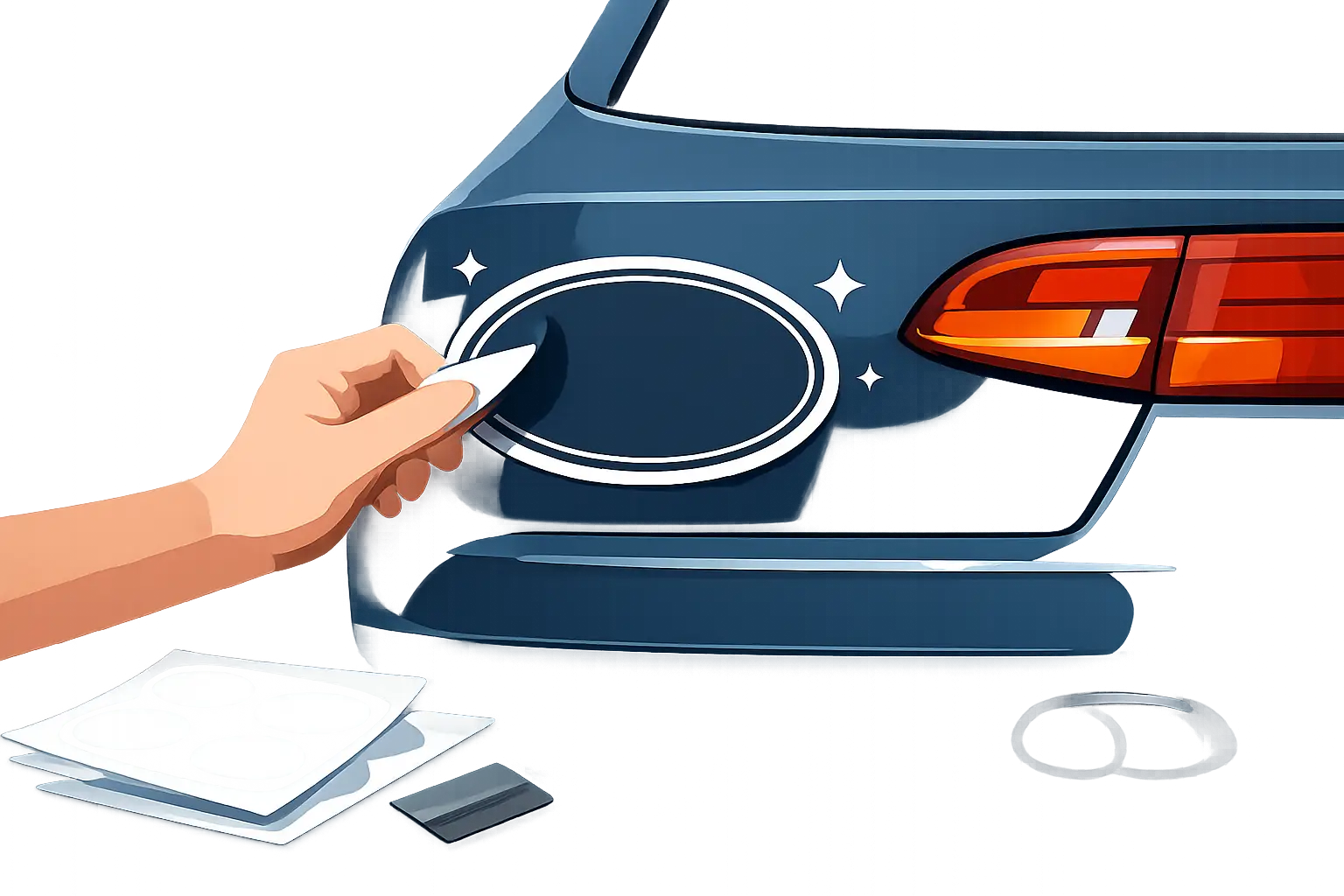
A plain rear window or bumper is wasted space when it could be doing a job. Custom oval stickers for cars give you a clean, familiar shape that works for everything from travel marks and club identity to business branding and personal style. They look simple, but the right material, sizing, and layout make the difference between a decal that lasts and one that starts curling, fading, or looking cheap after a few months.
Why custom oval stickers for cars still work
The oval format has staying power because it reads fast. At highway speed, a simple oval with bold lettering or a short message is easier to catch than a busy full-color graphic with too much detail. That matters whether you want to show state pride, promote a business, mark a fleet, or add a subtle custom touch to your daily driver.
The shape also fits naturally on vehicles. Ovals sit well on rear glass, tailgates, bumpers, quarter windows, toolboxes, trailers, and even smooth sections of RVs or enclosed race haulers. You get enough room for a few strong design elements without forcing a large decal into a tight space.
That simplicity is part of the appeal, but it creates a trade-off. Because the format is compact, every choice has to work harder. Font weight, contrast, letter spacing, and size matter more than people think.
What makes a good oval sticker design
A good design starts with restraint. Most custom oval stickers for cars look best when they stick to short text, initials, a location code, a simple logo, or a compact message. If you try to cram in a phone number, slogan, website, and graphic all at once, the oval starts fighting you.
High contrast usually wins. Black on white, white on black, navy on silver, or red on white tend to read well from a distance. Low-contrast combinations can look sharp up close, but on a moving vehicle they often disappear. Metallics, specialty colors, and printed graphics can work well, especially for enthusiast builds or show vehicles, but readability still needs to come first.
Letter style matters just as much. Script fonts may look great on a storefront window, but they are rarely the best choice for an oval car sticker unless the text is very short. Bold sans serif or clean serif lettering usually holds up better at smaller sizes and longer viewing distances.
Keep the message short
If the decal needs to be read quickly, keep it to the essentials. A country code style layout, a club abbreviation, a lake name, a race team mark, or a business identifier works well because the viewer gets it fast. Longer wording belongs on a larger door decal, windshield banner, or printed panel.
Match the decal to the vehicle
A compact oval on a small coupe will read differently than the same decal on a full-size pickup or commercial van. On darker vehicles, lighter vinyl often gives you the cleanest contrast. On white vehicles, darker colors usually hold their edge better. If the paint already has a lot going on, a simpler sticker often looks more intentional.
Material matters more than shape
People often focus on the artwork first, but the vinyl and adhesive determine how the sticker performs outdoors. Cars deal with UV exposure, heat, cold, rain, road grime, pressure washing, and constant expansion and contraction across glass and painted panels. If the material is weak, even a great-looking design will not stay that way.
For long-term use, automotive-grade vinyl is the safer choice. It conforms better, resists shrinking, and handles weather more reliably than bargain sticker stock. If the decal is going on a curved surface, flexibility becomes even more important. On flat glass, you have more room to work with standard constructions, but you still want a film made for outdoor exposure.
Printed oval stickers and cut vinyl ovals each have their place. Printed decals make sense when you need gradients, full-color logos, photos, or complex artwork. Cut vinyl is often the better fit when you want crisp lettering, solid colors, and a cleaner finished look. One is not always better than the other – it depends on the design, the surface, and how long you expect it to last.
Best places to apply oval stickers on a car
Rear glass is a favorite because it is smooth, visible, and less exposed to abrasion than some painted surfaces. A rear window decal usually stays cleaner visually, and if the sticker is small enough, it does not overpower the vehicle.
Bumpers are common too, especially for travel-style ovals or casual personalization. The issue is wear. Bumpers take more abuse from washing, loading gear, road debris, and sun reflection, so the finish and adhesive need to be up to the job.
Quarter windows, tailgates, and smooth side panels can also work well. For business use, placement depends on purpose. If the sticker is part of branding, visibility from traffic lanes matters. If it is for identity or club affiliation, a lower-profile location may make more sense.
Clean surfaces get better results
No matter where you place it, the surface has to be properly cleaned. Wax, silicone, dust, and traffic film are the usual reasons decals fail early. A sticker applied over residue may look fine on day one, then start lifting at the edge a week later.
Temperature matters too. Install in moderate conditions when possible. If the panel is too cold, the adhesive may not bond well. If it is too hot, positioning becomes harder and air bubbles are more likely.
Sizing custom oval stickers for cars
Size should follow viewing distance and placement, not guesswork. A small oval can look sharp on a quarter window but disappear on a large SUV. A decal that feels right on a compact sedan may look undersized on a pickup tailgate.
For subtle personalization, smaller sizes usually feel cleaner. For club identity, travel marks, or branding, medium sizes often give the best balance between readability and proportion. Larger ovals can work on trailers, vans, and RVs, but on standard passenger vehicles they need careful placement so they do not dominate the whole back end.
If you are using more than one sticker, consistency matters. Matching size, spacing, and alignment gives the vehicle a more professional finished look.
Business use, enthusiast use, and everything between
Oval stickers are flexible because they can lean commercial or personal without changing shape. A contractor might use them to reinforce a logo on a work truck. A motorsports customer might use an oval as a crew mark on a support vehicle or trailer. A car enthusiast may just want a clean, understated decal that feels more custom than a generic off-the-shelf sticker.
That overlap is why customization matters. The same basic oval can be built for different goals by changing color, finish, typography, and scale. Matte finishes can look more refined on modern vehicles. Gloss colors often pop harder on glass and painted panels. Reflective material may make sense for utility, service, or trailer visibility, but it can look too industrial for some personal vehicles.
At eDecals.com, that kind of control is what makes the product useful. You are not stuck with one template or a handful of stock colors. You can build the decal around the vehicle, the message, and how hard you need it to work.
Common mistakes to avoid
The biggest mistake is treating an outdoor vehicle decal like a laptop sticker. Cars live in a harsher environment, so cheap materials usually show their limits fast. Another common issue is making the design too detailed for the size. Fine lines, tiny text, and low contrast might look good on a screen, but not once installed.
Placement mistakes are just as common. Decals applied across defroster lines, on heavily textured plastic, or too close to edges can have shorter lifespans. And while removable options are useful in some cases, they are not always the right answer for long-term outdoor use.
If the goal is durability, think through the full setup before ordering – material, finish, size, color, and where the decal will live on the vehicle.
Getting the look right the first time
The best custom oval stickers for cars feel intentional. They fit the shape of the vehicle, the message is easy to read, and the material matches the job. Whether you are marking a personal ride, adding a business graphic, or building out support vehicles and trailers, the details are what separate a clean install from a decal you will want to replace too soon.
If you want the sticker to earn its place on the vehicle, keep it simple, size it correctly, and build it with real outdoor performance in mind. A well-made oval decal does not need a lot of flash to stand out.